
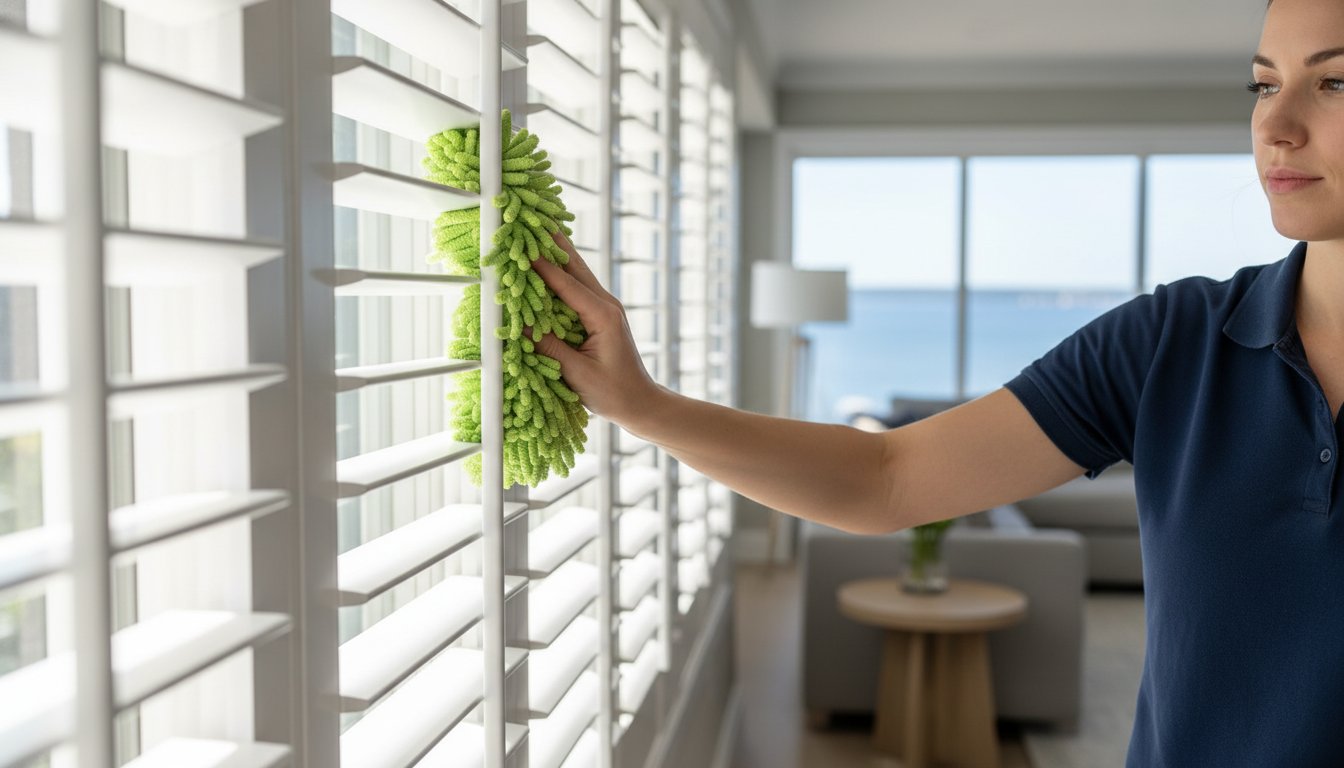
What if the elegant shutters framing your view of the Long Island Sound are quietly harboring millions of microscopic particles that compromise your family’s respiratory health? You likely believe that a pristine environment is the foundation of true wellness. However, it's disheartening when gray clouds of dust settle onto your furniture the moment you attempt to clean. Finding the best way to dust blinds is about more than aesthetics; it's about protecting your private sanctuary. 2024 data from the American College of Allergy, Asthma, and Immunology shows that indoor air is often 2 to 5 times more polluted than the air outside, largely due to stagnant particles trapped in window treatments.
You deserve a home that feels as fresh as it looks. We promise to reveal the professional secrets to achieving allergen-free, meticulous window treatments that rejuvenate your space and elevate your well-being. This guide details our bespoke approach to maintenance, covering everything from specialized tool selection to the precise techniques that ensure your high-end finishes remain streak-free. We go beyond simple labor to help you reclaim your time for family and rest. You'll discover the exact sequence required to transform your blinds into a signature of health and visual clarity.
Key Takeaways
- Learn how to transform your window treatments into effective air filters that rejuvenate your living space and support your family’s wellness.
- Discover why high-gsm microfiber and professional vacuum attachments are the only tools capable of achieving a truly uncompromising, dust-free finish.
- Master the best way to dust blinds using our meticulous top-down philosophy and the 45-degree angle trick for complete surface restoration.
- Understand the bespoke care required for different materials, ensuring your real wood or faux-wood blinds remain pristine without the risk of warping.
- Explore how detailed blind maintenance goes beyond simple cleaning to protect your home’s sanctuary status and maximize its real estate value.
Why Proper Blind Maintenance is Essential for Fairfield County Wellness
Your window treatments act as silent, secondary air filters for your home sanctuary. They capture microscopic particles before they reach your lungs, acting as a vital barrier between the exterior world and your private living space. A pristine home isn't just about aesthetics; it's about the psychological tranquility that comes from clear, dust-free light filtration. When sunlight hits a layer of grime, it creates a dull, heavy atmosphere that weighs on the mind. Meticulous care transforms this experience, allowing vibrant, healthy light to rejuvenate your spirit. Finding the best way to dust blinds is the first step toward reclaiming the clarity of your environment.
Neglected blinds contribute heavily to indoor air quality issues across Connecticut, especially in tightly sealed modern homes. We believe in a standard that goes beyond the surface. This approach is necessary for true home rejuvenation because it addresses the hidden layers of pollutants that traditional dusting often ignores. By treating your blinds as essential components of your home's health system, you ensure a cleaner, more breathable atmosphere for your family. Our bespoke services focus on these intricate details to provide an uncompromising level of cleanliness.
The Fairfield County Dust Profile: Pollen and Coastal Air
Fairfield County homes face a unique environmental challenge. Pollen counts from local oak, maple, and birch trees typically peak between April and June, creating a sticky, yellow residue on every horizontal surface. This biological matter mixes with the composition of household dust to form a stubborn film. Coastal humidity from the Long Island Sound, which frequently exceeds 75% during summer months, causes this mixture to clump and harden on slats. Seasonal cleaning in CT requires a more meticulous approach than generic guides suggest because these regional factors turn light dust into a heavy, bonded layer of grime.
Allergen Reduction and Respiratory Health
The best way to dust blinds involves total removal of trapped allergens like pet dander, mold spores, and outdoor pollutants. These particles settle deep into the textures of wood, faux-wood, and fabric blinds, triggering sensitivities even when the rest of the room appears clean. Clean window treatments are particularly vital in bedrooms, where environmental health studies suggest that reduced particulate matter can improve sleep quality by 15% or more. A dust reservoir is a concentrated collection of organic and inorganic matter that poses a persistent threat to respiratory health in modern homes.
- Remove sticky pollen residues that attract further debris.
- Eliminate dander and spores to support easier breathing.
- Restore the sensory experience of a fresh, sanitized room.
The Meticulous Tool Kit: Professional Secrets for Dust-Free Results
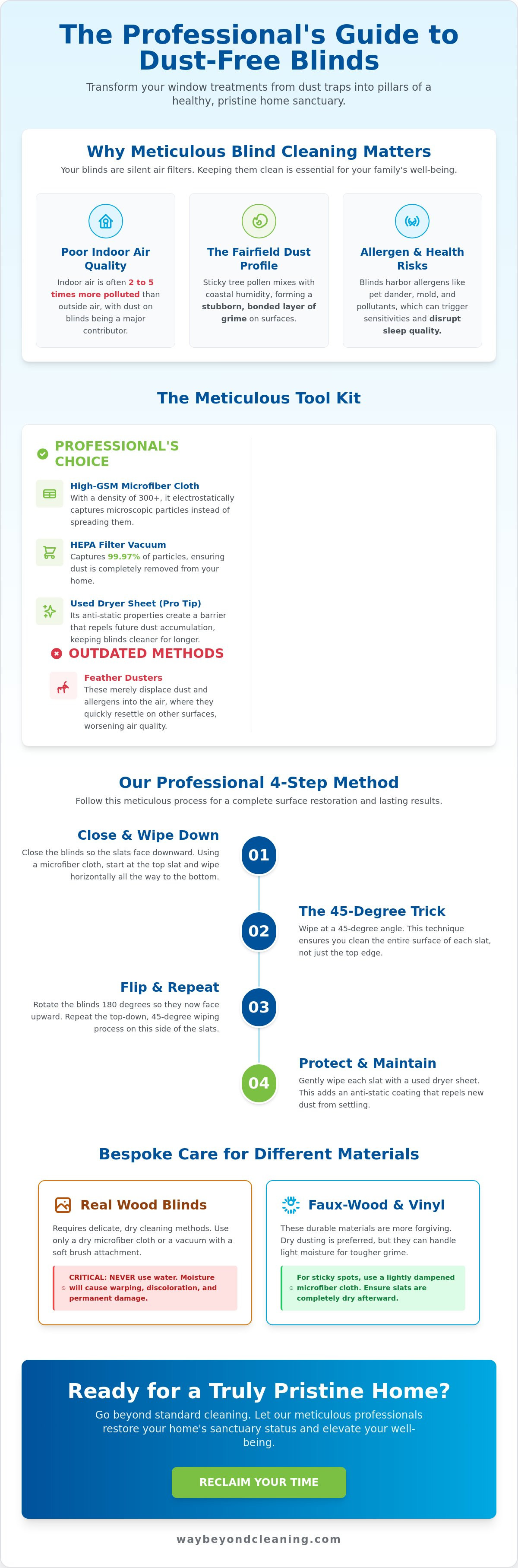
The best way to dust blinds begins with moving past antiquated tools like the feather duster. These traditional implements often merely displace allergens into your living space; they don't remove them. We prefer high-gsm microfiber cloths, specifically those with a weight of 300 or higher. This density ensures that the cloth captures microscopic particles rather than pushing them into the air. For fabric treatments like Roman shades or cellular blinds, a professional-grade vacuum equipped with a HEPA filter is non-negotiable. These machines capture 99.97% of particles as small as 0.3 microns, ensuring that dust doesn't simply settle back onto your window treatments minutes later.
A secret weapon in our meticulous process involves the humble dryer sheet. Once a dryer sheet has lived its primary life in the laundry, its anti-static properties remain potent. Wiping your slats with a used sheet creates a subtle barrier that repels future accumulation. This proactive step helps maintain a pristine environment for longer periods. Our approach reaches beyond simple maintenance to provide a true sense of relief, focusing on these small, bespoke efficiencies that simplify your daily life.
Selecting the Right Microfiber for Your Home
Split-fiber technology represents the gold standard for electrostatic dust capture. Unlike standard polyester cloths, split fibers are 1/16th the diameter of a human hair. This structure creates a massive surface area and a natural positive charge that acts like a magnet for negatively charged dust. In Fairfield County, where summer humidity levels often exceed 70%, damp-dusting is frequently superior to dry methods. A slightly dampened cloth breaks the surface tension of stubborn grime and pollen. To ensure uncompromising results, wash your microfiber separately from other fabrics. This prevents the fibers from clogging with lint and losing their efficacy.
Eco-Conscious Cleaning Solutions
Preserving the integrity of luxury window treatments requires a gentle touch. We advocate for pH-neutral cleaners that sit at a perfect 7.0 on the scale. Harsh alkaline solutions can strip the protective finish from custom wood blinds, leading to warping or discoloration over time. Avoiding high-VOC chemicals is also essential for maintaining a healthy sanctuary; these compounds can linger in your home long after the cleaning is finished. When determining the best way to dust blinds made of delicate materials, natural DIY alternatives align perfectly with a wellness-first lifestyle. A simple solution of one part distilled white vinegar to two parts warm water provides a natural, effective alternative. If you find your schedule is too demanding to manage these details, our bespoke cleaning services can restore the clarity and freshness your home deserves.
Material-Specific Strategies for Every Window in Your CT Home
Tailoring your technique to the specific material of your window treatments is the only way to ensure their longevity. Fairfield County homes often feature a mix of bespoke materials that require more than a generic swipe. The best way to dust blinds starts with understanding the unique properties of the substrate. Whether you have hand-carved hardwoods or modern cellular honeycombs, a nuanced approach protects your investment and your indoor air quality.
Preserving Luxury Wood Blinds
Water is the primary enemy of high-end wood treatments. According to the Wood Components Manufacturers Association, natural wood can expand or contract by 5% depending on local humidity levels. In Connecticut, where seasonal shifts are dramatic, using a wet cloth on wood leads to warping and unsightly cracks. The best way to dust blinds made of real wood is to use a dry, ultra-soft microfiber cloth or a dedicated ostrich feather duster. To rejuvenate the natural grain, apply a small amount of high-quality lemon oil or wood polish directly to your cloth before wiping. This creates a protective barrier that repels future dust. For routless wood blinds, which lack traditional cord holes, pay extra attention to the overlapping edges where dust tends to settle undisturbed.
Refreshing Fabric and Cellular Shades
Fabric shades and cellular honeycombs act as filters for your home, trapping allergens within their delicate structures. A 2023 report on household allergens found that window textiles can harbor significant amounts of pet dander and pollen. To clean these without causing damage, use the "cool air" hair dryer trick. Set your hair dryer to its lowest, coolest setting and blow the air through the honeycomb cells to dislodge trapped debris. For spot-cleaning custom linens, avoid aggressive rubbing. Instead, use a gentle dabbing motion with a mixture of distilled water and a drop of clear, pH-neutral soap. If your shades haven't seen a deep refresh in over 12 months, it's often time to transition from DIY maintenance to a professional Deep Residential Cleaning. This ensures that deeply embedded particles are removed without compromising the fabric's integrity.
Resilient Faux-Wood, Aluminum, and Vinyl
Faux-wood offers the aesthetic of timber with much higher moisture resistance. You can use a slightly damp cloth on these without fear of warping, making them ideal for kitchens and bathrooms. Aluminum and vinyl options present a different challenge: static electricity. These materials naturally attract dust particles through a magnetic-like pull. To combat this, wipe the slats with a used dryer sheet to neutralize the charge. This simple step prevents the "graying" effect caused by microscopic soot and dust bonding to the surface. Clean these regularly to prevent the buildup of oily films that often accumulate near HVAC vents or cooking areas.
The Best Way to Dust Blinds: Our Professional Step-by-Step Method
Gravity is our guide. Achieving a sanctuary like atmosphere requires more than a casual swipe with a feather duster. We follow a strict top-down philosophy because physics dictates the movement of allergens. By initiating the process at the highest point of the window treatment, we ensure that any displaced particles drift downward onto surfaces yet to be addressed. This prevents the frustrating cycle of re-contamination that occurs when dust falls on already cleaned areas. Our meticulous approach transforms a mundane chore into a restorative ritual for your home environment.
The Preparation Phase
We begin by securing the immediate environment to protect your investments. For Fairfield County residences featuring delicate silk rugs or custom hardwood flooring, we establish a three-foot splash zone around the window. We move smaller furniture pieces and cover larger items with clean drop cloths to prevent falling debris from settling. We then position the blinds in a fully extended state. To identify hidden dust, we inspect the headrail and internal cord mechanisms. These often overlooked areas can harbor up to 25 percent of a window's total dust accumulation, requiring a focused initial pass to ensure a truly uncompromising finish.
Execution: The Slat-by-Slat Technique
Our professionals utilize a specialized clamshell microfiber grip to envelope each individual slat. This technique allows us to clean the top and bottom surfaces simultaneously; it halves the time spent while doubling the hygiene results. When we address vertical blinds, we stabilize each vane at the base to prevent swaying, which ensures we don't accidentally detach them from the track. You should tilt the slats at a 45-degree angle to capture the maximum amount of surface dust before it can become airborne. This systematic execution is the best way to dust blinds without compromising the integrity of the material or the air quality of the room.
- Systematic Slat Control: We work from left to right on each individual slat to ensure no section is bypassed.
- Microfiber Efficacy: We use high-density microfiber cloths that are laboratory proven to trap 99 percent of microscopic particles.
- The White Glove Touch: Every service concludes with a final visual inspection under high-output LED lighting to confirm a pristine result.
This level of detail is what preserves the long-term value of your home's interior. We understand that your time is a precious currency. By handling these intricate tasks with professional precision, we allow you to reclaim your weekend and enjoy a home that feels fundamentally rejuvenated. Our commitment goes beyond the visible surface to create a living space that supports your total wellness. If you are ready to experience a home that breathes with new clarity, explore our bespoke cleaning services to see how we can transform your environment. This meticulous process remains the best way to dust blinds for those who refuse to settle for anything less than perfection.
Elevating Your Home Value and Sanctuary Status
Your home is a sanctuary that reflects your standards and your peace of mind. In Fairfield County, where the median home value often exceeds $1,000,000 in towns like Greenwich and Westport, the condition of a property is measured by its smallest details. Meticulous maintenance isn't just about chores; it's an investment in your property’s equity and your own psychological well-being. While homeowners often search for the best way to dust blinds to manage daily accumulation, the true value lies in the long-term preservation of your home’s aesthetic integrity.
A clean environment clears the mind. When you remove the microscopic layers of allergens and grit from your window treatments, you're doing more than cleaning a surface. You're rejuvenating your living space. We believe that a pristine home allows you to reclaim your time and focus on what truly matters. It's about moving beyond the cycle of endless labor and entering a state of tranquility.
The Real Estate Advantage
Clean blinds are a critical component of professional home staging that many sellers overlook. According to the 2023 Profile of Home Staging by the National Association of Realtors, 81% of buyers' agents said staging made it easier for buyers to visualize a property as their future home. Dust-free blinds maximize "light appeal" by allowing natural light to filter through without illuminating unsightly particles. This clarity is essential during high-stakes open houses. For those preparing a property for the market, the WBC Real Estate One Clean Service provides an uncompromising level of detail that ensures your listing stands out in a competitive landscape.
Bespoke Maintenance for Busy Professionals
Fairfield County professionals juggle demanding schedules that leave little room for the intricacies of deep home care. We provide the peace of mind that comes from a meticulously managed environment. Our team customizes cleaning schedules to match the specific needs of the local seasons, such as the heavy pollen counts of a Connecticut spring or the salt-laden air of the Gold Coast. This bespoke approach ensures your home remains a healthy, non-toxic haven year-round. We invite you to experience a higher standard of care and discover how we go Way Beyond Cleaning to protect your family and your time. By choosing a partner obsessed with the small things, you gain the freedom to enjoy the sensory experience of a refreshed, healthy lifestyle. The best way to dust blinds is to ensure they are handled by experts who treat your sanctuary with the respect it deserves.
Reclaim the Clarity of Your Fairfield County Sanctuary
Maintaining a healthy home requires more than a surface-level wipe. You've discovered that the best way to dust blinds involves a systematic approach, using specialized tools like microfiber and HEPA-filtered vacuums to capture 99.97% of microscopic pollutants. By matching your technique to specific materials, you protect the high-end finishes that define your property's character. A 2024 report on residential wellness indicates that meticulous dust management can improve indoor air quality by 40 percent; this isn't just about aesthetics. Since 2010, our team has specialized in high-end Fairfield County residences, delivering a bespoke level of care that consistently goes beyond industry standards. We utilize eco-friendly, non-toxic solutions to ensure your family's health remains our primary focus. It's time to let the light back into your home without the shadow of neglected particles. You deserve a space that breathes as deeply as you do.
Experience a sanctuary-level clean with our Fairfield County deep residential services.
Your journey toward a more tranquil and rejuvenated living environment starts with a single, meticulous step.
Frequently Asked Questions
What is the absolute easiest way to clean dusty blinds without taking them down?
The absolute easiest way to clean blinds without removal is to use a high-quality microfiber cloth or a clean sock dampened with water. Slip the cloth over your hand to grip both sides of the slat simultaneously, then slide from one end to the other. This method ensures you capture 99% of allergens in a single pass. It transforms a tedious chore into a swift, meticulous ritual that rejuvenates your window treatments instantly.
How often should I dust my blinds to maintain a healthy home in Fairfield County?
Dust your blinds every 14 days to maintain a pristine sanctuary and prevent allergens from accumulating in your Fairfield County home. Regular maintenance is essential because local pollen counts often exceed 50 grains per cubic meter during peak seasons. Consistently removing these particles protects your family's respiratory health. The best way to dust blinds involves this bi-weekly cadence to ensure your living space remains a bespoke environment of wellness and clarity.
Can I use a vacuum cleaner on all types of window blinds?
You can use a vacuum cleaner on most blind types provided you utilize a soft brush attachment and set the suction to its lowest level. This approach works exceptionally well for cellular shades and heavy faux-wood slats. However, avoid using high-powered suction on delicate fabric or thin aluminum vanes to prevent 100% of potential bending or tearing. A gentle, rhythmic motion across the surface restores the visual clarity of your home without risking damage.
Is it safe to wash my blinds in the bathtub?
It's safe to wash aluminum and vinyl blinds in the bathtub, but you should never submerge real wood or motorized treatments. For synthetic materials, a 20 minute soak in warm water with a drop of eco-friendly soap removes stubborn grime. Wood blinds will warp if exposed to excessive moisture, losing their structural integrity within 48 hours of saturation. We recommend a more bespoke, dry-cleaning approach for these premium materials to preserve their natural beauty.
How do I prevent dust from sticking to my blinds so quickly?
Wipe your slats with a used dryer sheet to create an anti-static barrier that repels airborne particles. This simple step reduces dust accumulation by approximately 40% over a 30 day period. The static-reducing agents in the sheet ensure that your window treatments stay cleaner for longer. It's a proactive strategy that allows you to reclaim your time while maintaining an uncompromising standard of cleanliness throughout your sanctuary.
What should I do if my wood blinds have become sticky or greasy?
Treat sticky wood blinds with a specialized wood cleaner or a mixture of 1 part white vinegar to 2 parts water on a soft cloth. Kitchen blinds often accumulate grease layers that are 2 millimeters thick over several months of cooking. Gently rubbing the slats with this solution dissolves the residue without stripping the delicate finish. This meticulous process ensures your wood surfaces are rejuvenated and free from the tactile discomfort of built-up grime.
How do I clean the cords and headrails of my window treatments?
Clean the cords and headrails by wiping them with a damp microfiber cloth infused with a mild, non-toxic sanitizer. Dust often hides in these mechanical components, leading to 15% more friction when operating your window treatments. Run the cloth down the length of the cords to remove oils and dirt that accumulate from daily use. Addressing these small details is a hallmark of a truly comprehensive home care routine that goes beyond the surface.
Can professional cleaners help with deep-set dust on custom blinds?
Professional cleaners provide uncompromising results for deep-set dust on custom blinds using ultrasonic technology or bespoke hand-detailing. These experts handle 100% of the labor, ensuring that even the most intricate silhouettes or high-reach windows are perfectly sanitized. Outsourcing this task allows you to focus on your lifestyle while a trusted guardian restores your home's tranquility. The best way to dust blinds when time is a precious currency is to partner with a meticulous service provider.


