

What if the most thorough end-of-day clean also fit your practice’s workflow? Dental office cleaning services Stamford CT practices rely on should be planned around the rooms in use, the day’s schedule, and the handoff between clinical care and cleaning. It’s understandable to wonder where routine janitorial work ends and terminal cleaning begins, or how focused cleaning can happen without disrupting patients and staff. A clear plan makes those decisions easier.
This guide explains how to define a practical cleaning scope for a dental office, coordinate the work with daily operations, and shape a schedule around your practice. You’ll learn how to distinguish routine upkeep from focused attention to clinical and shared spaces, so expectations are clear from the start. A tailored commercial cleaning plan from a Fairfield County partner can support a polished, orderly environment while your team focuses on patient care.
Key Takeaways
- Define cleaning tasks by practice area, with clear expectations for floors, touchpoints, furnishings, and visible surfaces.
- A useful service plan makes the scope, schedule, and communication process easy for your team to coordinate.
- Dental office cleaning services Stamford CT practices need can be tailored to the spaces staff and patients use.
- Share room-use patterns and schedule changes to help align cleaning priorities with practice operations.
- Way Beyond Cleaning provides commercial janitorial and medical facility cleaning services for dental practices in Fairfield County.
Dental Office Terminal Cleaning in Stamford, CT: What It Covers
Practice managers need to know whether recurring upkeep covers every part of the office that needs attention. A tidy reception area and regularly maintained floors matter, but they may not cover the full scope a practice wants for designated rooms and surfaces. Planning focused cleaning helps clarify which tasks happen, where they happen, and how they fit the practice’s routine.
Terminal cleaning is a focused, planned cleaning period for designated areas, with tasks and timing defined in the practice’s service plan. The term describes the scope and organization of the work, not a universal checklist that applies identically to every dental office.
How terminal cleaning differs from routine dental-office cleaning
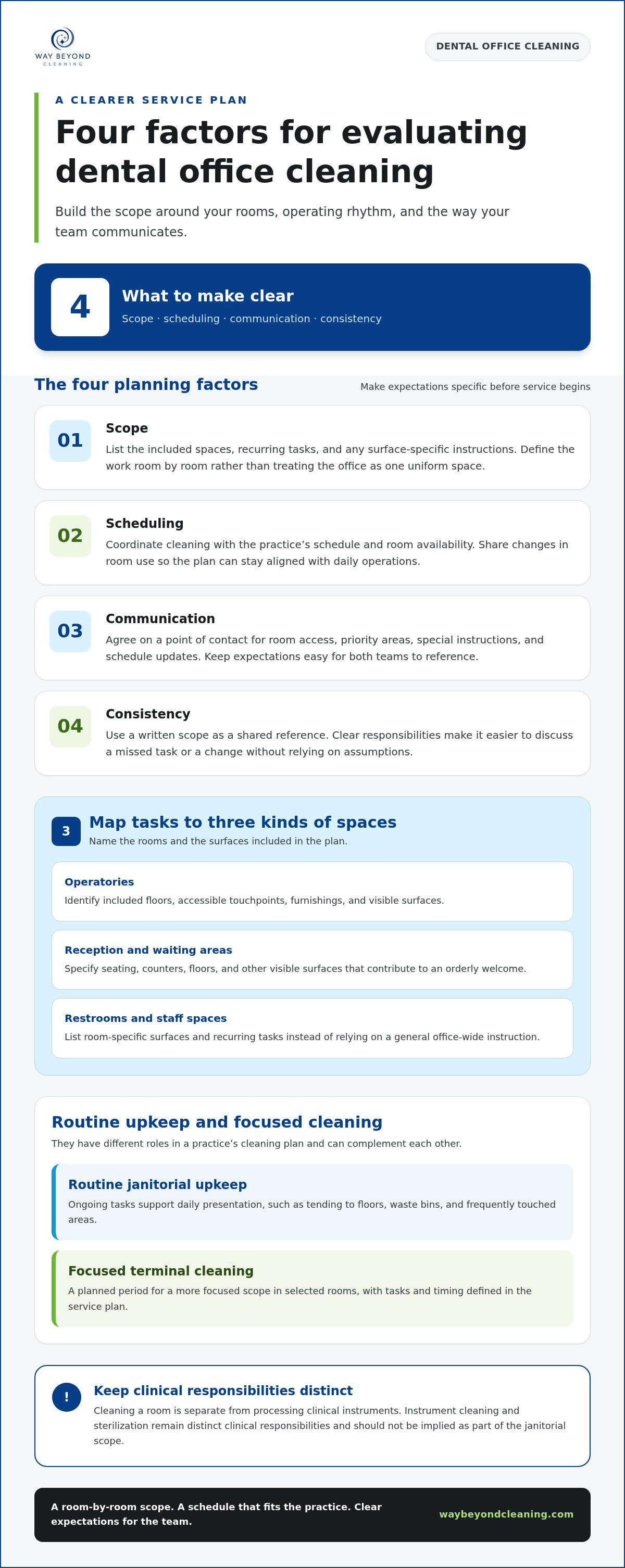
Recurring janitorial upkeep keeps shared spaces orderly through ongoing tasks such as tending to floors, waste bins, and frequently touched areas. A terminal-cleaning plan sets aside a defined period for a more focused scope in selected rooms. These approaches can complement each other: routine work supports daily presentation, while focused cleaning addresses agreed tasks that need dedicated attention. The exact scope depends on the rooms, surfaces, and service plan.
Why Stamford practices need a plan built around their rooms
A dental office’s layout shapes its cleaning needs. Operatories may call for attention to different surfaces than reception, restrooms, or staff spaces. A plan that distinguishes these areas prevents vague expectations, such as assuming every room receives the same tasks. It also gives practice managers a practical way to coordinate access and communicate priorities when room use or schedules change.
That clarity supports the experience of patients and staff. A neat reception area can feel welcoming, and orderly staff spaces can make the working environment feel more considered. These are practical contributions to the atmosphere of the office, not promises of a particular clinical outcome. For a broader overview, infection control addresses factors related to the spread of infections within healthcare settings, while a cleaning plan defines its own agreed tasks and boundaries.
For practices in Stamford and across Fairfield County, a tailored approach can account for the spaces in use and the rhythm of the workday. Commercial cleaning services can be organized around a practice’s areas and schedule, with a clear scope so staff know what to expect. This gives routine upkeep and focused cleaning defined roles in the plan.
What a Dental Terminal-Cleaning Plan Can Cover
A useful plan makes the work visible and specific. Rather than treating the entire office as one uniform space, map tasks to the rooms people use and the surfaces that need attention. The examples below can help a practice manager shape a written scope. The tasks should reflect the room, its materials, and the agreed service plan.
Map cleaning tasks to operatories and shared areas
In operatories, a scope might identify which accessible floors, touchpoints, furnishings, and visible surfaces are included. Reception and waiting areas may call for attention to floors, seating, counters, and other visible surfaces that shape a patient’s first impression. Restrooms and staff spaces have their own furnishings and touchpoints, so list them separately rather than assuming they follow the same task pattern.
Room details matter. A surface’s material, placement, or use may call for different instructions, which the practice can clarify in the service plan. A task such as wiping a counter should name the counter and describe the expected work, rather than leaving staff and cleaners to interpret “clean the room” differently.
- Operatories: Name the included floors, accessible touchpoints, furnishings, and visible surfaces.
- Reception and waiting areas: Specify the seating, counters, floors, and other surfaces that contribute to an orderly welcome.
- Restrooms and staff spaces: Identify room-specific surfaces and recurring tasks instead of relying on a general office-wide instruction.
Cleaning the room is separate from processing clinical instruments. Instrument cleaning and sterilization remain distinct clinical responsibilities, so the janitorial scope should not imply that a cleaning service performs them. Clear boundaries help the practice assign each task to the appropriate workflow.
Define what the service plan includes
Put the agreed scope in writing. List each included space, its recurring responsibilities, and any surface-specific instructions the practice wants followed. This gives both teams a shared reference and makes it easier to discuss a missed task or a change without relying on assumptions.
Access and communication need the same clarity. The practice can identify which rooms are available, flag priority areas, and share special instructions or schedule changes through an agreed point of contact. If a room’s use changes, updating that information helps keep the plan aligned with the office’s actual routines.
For broader context on cleaning in clinical environments, explore this medical facility cleaning guide. Practices considering commercial cleaning services can use a room-by-room scope as a practical starting point for defining spaces, priorities, and scheduling needs.
How to Evaluate Dental Office Cleaning Services in Stamford
For a dental practice, a cleaning relationship works best when expectations are clear before the first visit. A polished office depends on more than what gets cleaned. The agreed tasks also need to fit the rooms, operating rhythm, and communication habits of the practice. A practical evaluation focuses on four things: scope, scheduling, communication, and consistency.
Compare scope, communication, and scheduling
Start with a written scope that names the spaces and recurring tasks. Broad phrases such as “clean the office” leave room for different interpretations. Specific descriptions help staff understand what’s covered and make it easier to review the work. Identify a point of contact for sharing room-access details, priority changes, or instructions that affect a particular area.
Scheduling should reflect how the office functions. Consider which areas need regular attention, when rooms are typically in use, and how access can be coordinated without interrupting patient care. The plan can then fit the practice’s operating rhythm instead of assuming one schedule works for every office. Consistency comes from keeping the scope and communication process steady, then updating them when practice needs change.
- Scope: Are included rooms and recurring tasks clearly described?
- Coordination: Is there a practical way to share access instructions and changes?
- Schedule: Does the timing account for how the practice uses its spaces?
- Consistency: Can staff refer to the same expectations when reviewing the service?
These questions help a practice clarify its priorities rather than rely on general promises. They also make it easier to identify where routine janitorial upkeep supports the office and where a focused task belongs in the agreed plan.
Choose a commercial partner suited to clinical spaces
Dental offices combine clinical rooms with reception, restrooms, and staff areas. A cleaning plan should reflect those distinct spaces instead of treating the practice like a generic office. Way Beyond Cleaning provides commercial janitorial and medical facility cleaning services, with plans tailored to the practice’s spaces and schedule. A clear working arrangement can support an orderly environment for patients and staff.
For a broader view of business cleaning considerations, the Fairfield commercial janitorial guide offers related context. For Stamford practices, the same useful principle applies: define what matters in your own space, establish a straightforward communication routine, and keep expectations visible as needs evolve.
Way Beyond Cleaning serves Fairfield County, including Stamford. A tailored commercial cleaning plan can help align service scope with the rooms and routines that shape each day.
How to Coordinate Terminal Cleaning Around Dental Practice Operations
A smooth cleaning handoff starts with shared expectations, not guesswork. The practice knows which rooms are in use and what has changed during the day; the cleaning team follows the agreed service scope. A simple coordination sequence helps keep responsibilities clear without turning the plan into a universal clinical protocol.
- Identify priorities. Note the rooms included in the scheduled visit and flag areas that need particular attention.
- Agree on access. Clarify which rooms are available and identify any temporary restrictions.
- Communicate instructions. Share changes to room use, access, or priorities through the agreed point of contact.
- Review the work. Compare completed tasks with the written scope and use specific feedback to refine coordination.
Prepare rooms and communicate priorities
Room-use patterns can make the handoff more practical. For example, if an operatory remains in use later than usual or a room is temporarily unavailable, staff can communicate that change before the scheduled cleaning visit. They can also identify priority areas so the team knows which accessible spaces are ready for attention.
Keep clinical decisions with the dental team. Practice staff should manage patient records, instruments, and clinical materials under the office’s own procedures; cleaning staff work within the agreed service scope and access instructions. This boundary prevents confusion about who handles sensitive items and keeps the cleaning plan focused on defined tasks.
Review service consistency and refine the plan
After a visit, review what was completed against the written scope rather than relying on an informal impression of whether the office looks ready. If a listed task was missed or a room was unavailable, share that detail through the established communication channel. Clear observations are easier to act on than broad feedback, and they help distinguish an access issue from a scope question.
Over time, the practice can use these reviews to adjust room priorities, clarify instructions, or communicate recurring schedule changes. The goal is a dependable handoff that supports daily operations without asking cleaning staff to make clinical decisions. For teams considering dental office cleaning services Stamford CT, coordination is an essential part of shaping a plan around the practice’s actual workflow.
Way Beyond Cleaning tailors commercial janitorial services to business spaces and schedules. Explore commercial cleaning services to consider an approach suited to your practice’s needs.
Partner With Way Beyond Cleaning for a Stamford Dental Office
A dependable cleaning relationship should make responsibilities easier to understand, not add another layer of coordination to a busy practice. The right plan begins with a clear scope, practical communication, and a schedule shaped around how the office uses its rooms. These details help staff know what to expect and give the cleaning team a consistent framework to follow.
What a tailored cleaning relationship should make easier
For a dental office, a tailored plan can distinguish operatories from reception, restrooms, and staff areas, then define the tasks associated with each. It can also make it straightforward to share access instructions or flag a change in room use. Clear arrangements reduce ambiguity around the cleaning work, leaving practice staff more time to focus on their responsibilities.
A well-kept environment contributes to how the office feels. Clear surfaces, orderly shared spaces, and a cared-for reception area can support staff confidence and help patients feel welcomed. These are practical benefits of thoughtful service planning, not promises about clinical outcomes. The goal is a presentable practice that reflects the care your team brings to its daily work.
Way Beyond Cleaning provides commercial janitorial and medical facility cleaning services, with plans tailored to a practice’s spaces and schedule. Its Fairfield County service context includes the Stamford market, offering dental practices a local commercial cleaning relationship focused on defined responsibilities and straightforward coordination. For teams considering dental office cleaning services Stamford CT, the plan should fit the practice rather than rely on a generic checklist.
Take the next step toward a defined service plan
Start by outlining the spaces you want included, the tasks that matter most, and the operational details that shape access. For example, note which rooms are used throughout the day, where staff need clear instructions, and how schedule changes should be communicated. These details provide a useful foundation for a service plan that reflects the real flow of the office.
Keep the first conversation simple. Share your priorities and questions, then discuss how commercial janitorial service can be organized for your practice. A clear starting point makes it easier to align expectations before the plan begins and adjust the arrangement as your needs evolve.
Ready to discuss a cleaning plan for your Stamford dental office? Explore commercial cleaning services and start a conversation about your practice’s spaces, priorities, and operational needs.
Make Your Cleaning Plan a Living Part of the Practice
A cleaning plan can evolve as your practice changes. A room may take on a new use, staff routines may shift, or priorities may become clearer with experience. Treat the service scope as a working reference. When something changes, update the relevant instructions so expectations stay useful and coordination remains straightforward.
That habit helps your team protect time for patient care while keeping the office welcoming and orderly. It also gives you a practical way to plan dental office cleaning services Stamford CT practices can build around their own spaces, routines, and priorities. Start with the needs you can identify today, then refine the plan as your practice’s needs develop.
Discuss a tailored cleaning plan for your dental office and take a confident next step toward a setting that feels ready for your team and patients.
Frequently Asked Questions
What is terminal cleaning in a dental office?
Terminal cleaning is a planned, focused cleaning of designated areas, separate from everyday upkeep. Its scope depends on the rooms, surfaces, and responsibilities defined in the service plan, so it shouldn’t be treated as a universal clinical protocol. It’s also distinct from between-patient room turnover. The dental team remains responsible for clinical procedures and instrument processing, while the cleaning plan clarifies facility-cleaning tasks.
Is terminal cleaning the same as disinfecting?
No. Cleaning removes visible soil and residue from surfaces; disinfection is a separate process that uses a product according to its directions. A cleaning visit shouldn’t be assumed to include every disinfection task a practice needs. To avoid confusion, describe each requested task specifically in the service scope, including which surfaces are covered and whether the work involves cleaning, disinfection, or both.
How often should a dental office schedule terminal cleaning?
There’s no single schedule that suits every dental practice. Consider how frequently rooms are used, patient volume, operating hours, and the practice’s own procedures. A manager can review room use and operational needs with the dental team, then shape a schedule around those factors. Revisit it if room use changes, and rely on the practice’s applicable guidance for any clinical frequency requirements.
Can a dental office be cleaned without interrupting patient appointments?
Coordination can help reduce disruption, but access depends on the office’s schedule and agreed service scope. A room-use calendar can help staff identify spaces that are unavailable, while a clear way to share same-day changes can prevent confusion. Dental office cleaning services Stamford CT practices arrange should account for patient flow and access instructions rather than assume every area is available during appointments.
Does terminal cleaning include sterilizing dental instruments?
No. Cleaning facility surfaces and processing instruments for reuse are separate responsibilities. The dental practice’s designated team should manage instrument handling and sterilization through its clinical procedures. For example, the cleaning scope can explicitly exclude instrument trays and clinical materials, helping prevent uncertainty about what cleaners may move or handle. Clear boundaries protect the practice’s workflow and keep facility cleaning tasks well defined.
How much do dental office terminal cleaning services cost?
Cost depends on the practice’s spaces, requested tasks, service frequency, and operational needs. Before discussing an estimate, make a simple room list and note which tasks you want considered for each area. Then compare proposals by the work and visit frequency they describe, not by price alone. Way Beyond Cleaning tailors commercial janitorial planning to a business’s needs rather than relying on a one-size-fits-all scope.


