

What if the right cleaning plan could preserve the calm your clients expect without disrupting the rhythm of your appointments? For spa and salon owners, a fresh reception area matters, but so does a routine that works around treatments, bookings, and staff responsibilities. Spa and salon cleaning services Fairfield County businesses choose should reflect how each space is used, not rely on a generic janitorial checklist.
A thoughtful plan helps create a welcoming first impression and gives you a practical way to coordinate cleaning with the flow of your business. This guide compares priorities across spa and salon spaces, explains how to define a service scope, and offers ways to plan visits around operating routines. Use it to identify the areas that matter most, decide what information to share when setting up recurring service, and build a commercial cleaning plan that fits your premises.
Key Takeaways
- Identify the client-facing areas that shape a first impression, from reception to treatment or styling spaces.
- Build a space-by-space scope that names priorities such as shared surfaces, floors, and client restrooms.
- Compare spa and salon cleaning services Fairfield County businesses need by scope, visit frequency, scheduling fit, and communication.
- Map operating hours, appointment patterns, and staff routines to find practical cleaning windows.
- Way Beyond Cleaning tailors commercial janitorial arrangements around your business’s square footage and preferred service frequency.
Why Spa and Salon Cleaning Matters for Fairfield County Businesses
A full appointment book leaves little time to reset the space between arrivals, services, and closing routines. Yet clients notice the details as soon as they enter: an orderly reception counter, tidy furnishings, and floors that look cared for. These visible cues shape a first impression and help set the tone for a visit.
A spa or salon is not simply an office with different furniture. Clients move through a sequence of spaces, from arrival and waiting to styling or treatment and departure. That flow calls for a cleaning plan based on how the premises are used. The Beauty Salon Wikipedia article provides a general overview of salon services and discusses infectious disease risks, a reminder that cleanliness matters to presentation as well as the guest experience.
For businesses in Fairfield County, Connecticut, a useful cleaning plan starts with the actual layout, appointment patterns, and areas clients and staff share. Way Beyond Cleaning provides commercial janitorial services in the area, with recurring arrangements tailored to factors such as square footage and service frequency. Its commercial cleaning services support orderly, welcoming business spaces.
Which parts of a spa or salon shape the client experience?
Each area contributes to the impression clients take away. Reception and waiting spaces welcome guests, so uncluttered counters and tidy furnishings help the room feel composed. Styling stations and treatment rooms are where clients spend time receiving services, making the visible surroundings part of the overall experience. Floors carry that sense of care throughout the premises, while restrooms are another shared space guests may notice.
Consistency is the goal. A polished environment feels considered throughout the visit, not hurriedly tidied just before one appointment.
Why does cleaning need to fit the appointment calendar?
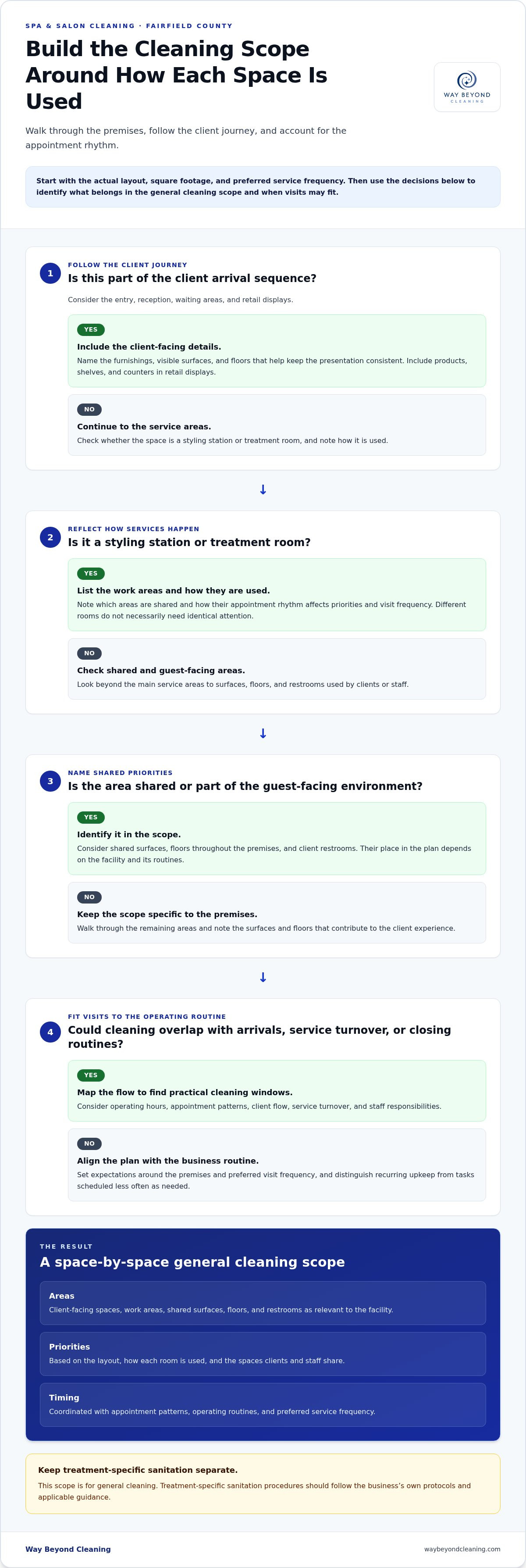
Arrival patterns, service turnover, and closing routines all affect when cleaning can fit comfortably into the day. A busy period may leave little room to attend to shared areas, and staff also need clear routines for maintaining the spaces they use. Map client flow and staff responsibilities to identify practical cleaning windows. This also helps distinguish recurring upkeep from tasks that can be scheduled less often according to the business’s needs.
The goal is coordination, not disruption. A commercial cleaning schedule can reflect the premises, operating routines, and preferred visit frequency, helping owners plan upkeep while keeping attention on clients and staff.
What a Spa and Salon Cleaning Plan in Fairfield County Should Address
A useful cleaning scope starts with the space itself. A compact salon with a few styling stations has different priorities from a larger spa with several treatment rooms, a waiting area, and client restrooms. Walk through the premises area by area and note which surfaces, floors, and shared spaces contribute most to the client experience. The plan can then reflect the layout, square footage, and preferred service frequency.
This is commercial janitorial planning, focused on orderly business spaces and visible cleanliness. It is separate from treatment-specific sanitation procedures, which should follow the business’s own protocols. Spa and salon cleaning services Fairfield County businesses use should fit the premises and daily operations rather than treating every room as if it serves the same purpose.
How should reception and client areas be included?
Start with the arrival sequence: entry, reception, waiting areas, and any retail displays. These spaces introduce the business before a service begins. A scope can identify the furnishings, visible surfaces, and floors that need attention to keep the presentation consistent. Retail displays should be included in the walkthrough too, since products, shelves, and counters contribute to the appearance of the room.
Consistency is the aim. A clear, cared-for reception creates a welcoming transition from outside into the salon or spa.
How do styling stations and treatment rooms affect scope?
The number of work areas and how the business uses them help shape the plan. Styling stations may sit close together, while treatment rooms may be more private and used on a different appointment rhythm. List the stations and rooms, note which areas are shared, and consider how their use affects cleaning priorities and visit frequency. This creates a scope based on the actual layout instead of assuming every station or room needs identical attention.
What about shared surfaces, floors, and restrooms?
Look beyond the main service areas. Shared surfaces connect staff and client spaces, floors run throughout the premises, and restrooms form part of the guest-facing environment. Their place in the plan depends on the facility and its routines. Naming these areas in the scope helps align expectations about general cleaning, while leaving treatment-specific sanitation procedures to the business’s own protocols and applicable guidance.
Way Beyond Cleaning tailors commercial janitorial arrangements around factors such as square footage and service frequency. A space-by-space discussion turns these priorities into a practical plan. Explore commercial cleaning services to learn more about the company’s business cleaning offering.
How to Compare Spa and Salon Cleaning Services in Fairfield County
A useful comparison looks beyond a general promise to clean. For a spa or salon, the scope, visit frequency, scheduling fit, and communication expectations should work together. These criteria help turn the business’s layout and appointment rhythm into a practical commercial janitorial arrangement.
| Criterion | What to compare | Way Beyond Cleaning’s tailored approach |
|---|---|---|
| Scope | Are the areas and task expectations clear, including reception, work areas, floors, and restrooms? | The plan can be shaped around the premises and its square footage. |
| Visit frequency | Does the recurring frequency reflect how the business uses its space? | Commercial janitorial arrangements can be customized around preferred service frequency. |
| Scheduling fit | Does the routine account for opening hours, appointment patterns, and preferred cleaning windows? | Planning can take the business’s operating routines into account. |
| Communication | Are the scope, frequency, and expectations easy to discuss and understand? | A tailored plan starts with the specific needs of the business rather than a one-size-fits-all template. |
What should the cleaning scope make clear?
Compare the spaces and tasks in plain language. A salon may prioritize styling areas and customer-facing displays, while a spa may have multiple treatment rooms alongside reception and waiting areas. The scope should reflect those differences and identify which spaces are part of the recurring plan. Way Beyond Cleaning tailors commercial arrangements to the premises, with square footage among the factors that shape the plan. Start by listing what the space contains and how each area is used.
How can a service schedule fit a busy business?
Consider opening hours, appointment patterns, and preferred cleaning windows together. Discuss when clients arrive, when staff use each area, and how closing routines work. Agreeing on recurring frequency and communication expectations helps keep the arrangement aligned as operating needs evolve, without assuming every spa or salon needs the same routine.
For a broader view of how commercial cleaning plans support business spaces, explore Way Beyond Cleaning’s commercial janitorial services. With spa and salon cleaning services Fairfield County businesses can tailor around their premises and preferred frequency, the comparison becomes less about generic promises and more about fit.
How to Plan Cleaning Around Appointments, Treatments, and Staff Routines
A workable cleaning plan starts with the way your spa or salon runs. Appointment patterns, room use, and staff responsibilities all affect which cleaning windows are practical. Map these details before setting a recurring schedule so cleaning becomes part of the operation rather than an interruption to it.
What information helps shape a workable cleaning schedule?
Start with a clear picture of the day. Note business hours, appointment peaks, quieter periods, and closing routines. Then identify which spaces welcome clients and which staff use throughout the day, including shared areas and rooms that may be occupied for longer appointments.
Use that information to shape the plan:
- Map the flow. Identify when clients arrive, move between areas, and depart, along with when staff need access to rooms.
- Separate priorities. Distinguish routine upkeep from less frequent tasks according to how the premises are used and what the business needs.
- Set planning inputs. Consider square footage and preferred service frequency when developing a recurring janitorial arrangement.
This gives the planning conversation practical detail without imposing a universal schedule. Way Beyond Cleaning tailors commercial janitorial arrangements around the premises and requested frequency.
How can cleaning coordination reduce disruption?
Agree on clear expectations for access and communication. Staff should understand which spaces are included in the plan and how access is coordinated. The cleaning arrangement should also account for client movement and staff use of shared spaces. For example, the order for attending to reception and work areas can be planned around when those spaces are in use. The best sequence depends on the business’s routines.
Keep the plan adaptable. Appointment patterns can shift, staff routines can change, and a business may rearrange or expand its premises. Reviewing the scope and schedule after a meaningful change helps keep the arrangement aligned with the way the space works now. It is also a practical time to revisit service frequency as needs evolve.
For spa and salon cleaning services Fairfield County businesses can shape around their operations, connect your space and preferred service frequency to a tailored commercial plan. Explore commercial cleaning services and take the next step toward a schedule designed around your business.
Choose Way Beyond Cleaning for a Tailored Fairfield County Business Plan
A spa or salon needs a cleaning arrangement that reflects how its space works, from client-facing areas to rooms staff use throughout the day. Based in Fairfield, Connecticut, Way Beyond Cleaning provides commercial janitorial services to businesses in Fairfield County and nearby counties in Connecticut. Its recurring arrangements are shaped around the premises and the business’s operating needs.
What makes a tailored commercial cleaning arrangement useful?
A tailored scope starts with the salon or spa’s layout, square footage, routines, and priorities. A business with a compact reception area and several styling stations may organize its needs differently from a spa with multiple treatment rooms and shared client areas. Recurring service arrangements can be customized around square footage and preferred visit frequency, connecting the plan to the actual space instead of a generic template.
Clear expectations also help owners and staff understand how cleaning fits into everyday operations. The scope can reflect the areas that matter to the business, while scheduling discussions account for its routines. The goal is a composed, welcoming environment supported by a practical commercial janitorial plan.
What are the next steps for getting started?
Begin with a concise picture of the business: its layout and approximate square footage, the areas that need attention, how the space is used, and the service frequency you prefer. Sharing appointment patterns and staff routines can also help shape a plan that fits the operation.
Way Beyond Cleaning offers recurring commercial janitorial arrangements customized around square footage and service frequency. Pricing and billing are based on the specific arrangement, so discuss the scope and preferred frequency as part of planning. If the business changes, revisit the plan to reflect new priorities or a different use of the space.
Way Beyond Cleaning serves Fairfield County and nearby counties in Connecticut, bringing local commercial janitorial support to businesses seeking a more orderly, client-ready space. For spa and salon cleaning services Fairfield County owners can shape around their premises and operating routines, explore commercial cleaning services and discuss a tailored plan for your spa or salon.
Create a Calmer, Client-Ready Space
A welcoming spa or salon depends on more than a polished first impression. A clear scope for reception, service areas, floors, and restrooms defines what the cleaning plan addresses, while a schedule shaped around appointments and staff routines supports the rhythm of the business.
For spa and salon cleaning services Fairfield County businesses can tailor to their needs, Way Beyond Cleaning brings a local perspective as a Fairfield, Connecticut-based company. Its recurring commercial janitorial arrangements can be customized around square footage and service frequency, helping align the plan with your premises and preferred routine.
Your space has its own flow. Share the areas that matter most, how your team uses them, and your preferred service frequency to start shaping a practical plan. Explore commercial cleaning services for your business and take the next step toward a more orderly, welcoming environment for clients and staff.
Frequently Asked Questions
What does spa and salon cleaning typically include?
A commercial cleaning plan can address the areas clients and staff use throughout the business. Depending on the agreed scope, priorities may include reception and waiting areas, styling stations or treatment rooms, shared surfaces, floors, and client restrooms. The right scope reflects the premises and its layout rather than a universal checklist. Treatment-specific sanitation procedures remain separate from general janitorial planning and should follow the business’s own protocols.
How often should a salon or spa be professionally cleaned?
The right frequency depends on the space, how it is used, and the business’s preferred service routine. Consider the size of the premises, appointment patterns, client traffic, and areas that need regular attention. A small salon and a larger spa may have different priorities. Way Beyond Cleaning tailors recurring commercial janitorial arrangements around square footage and service frequency, creating a plan suited to the business’s operations.
Can cleaning be scheduled around client appointments?
Yes. Scheduling discussions can take appointment patterns and business routines into account. Map opening hours, busy periods, quieter windows, and closing routines, then consider which areas staff and clients use at different times of day. Sharing these details helps shape a practical recurring plan. The schedule should reflect the premises and agreed arrangement, rather than assume one timing works for every spa or salon.
How do I compare spa and salon cleaning services in Fairfield County?
Compare the proposed scope, recurring visit frequency, fit with operating routines, and clarity of communication. Check that the plan describes the areas it addresses in plain language, from reception to service spaces, floors, and restrooms. Then consider whether the frequency aligns with how the premises are used. Spa and salon cleaning services Fairfield County businesses choose should be shaped around the actual layout and priorities, not generic assumptions.
Do spa and salon cleaning services in Fairfield County offer recurring plans?
Way Beyond Cleaning provides recurring commercial janitorial arrangements customized around factors such as square footage and service frequency. A spa or salon can shape a routine around the size and use of its premises. Share the business’s priorities and preferred frequency when planning the arrangement so the scope connects with its operating needs.
How can a salon prepare for a professional cleaning visit?
Help the plan run smoothly by identifying the areas included, noting access considerations, and explaining how staff use the space. Align appointment or closing routines with the agreed cleaning window, and make sure the team understands room access. You can also share changing priorities, such as a rearranged station or a room with a new use. These practical details help coordinate the cleaning arrangement with daily operations.


