

A smooth final walkthrough depends less on a frantic last-minute wipe-down and more on a calm, repeatable review. Preparing your office for final inspection can feel overwhelming when you’re unsure which rooms, surfaces, and small details deserve attention first. A clear process makes the work manageable, helps you use your time wisely, and brings order to the workplace.
The challenge is catching cleaning details without confusing them with repairs or other maintenance concerns. This guide offers a practical, room-by-room approach to a cleanliness walkthrough, from reception and work areas to shared spaces and restrooms. You’ll learn what to review, which touchpoints are easy to overlook, and how to flag issues that need separate attention. With a consistent checklist, inspection readiness becomes part of a steady cleaning routine, not a last-minute scramble.
Key Takeaways
- Clarify the walkthrough’s scope and expectations before organizing the cleaning, since reviewers and priorities can vary.
- Use a room-by-room checklist to review visible surfaces, shared spaces, and work areas.
- Look beyond prominent surfaces: corners, edges, interior glass, and baseboards can reveal details that need follow-up.
- Make preparing your office for final inspection easier with a simple sequence for access, cleaning, review, and issue tracking.
- Build readiness into a recurring cleaning routine suited to your office layout and how people use it.
Preparing Your Office for Final Inspection Starts with a Clear Scope
A final office walkthrough is a practical review of the workplace’s visible condition, not a promise of a particular inspection result. A client, tenant, facility manager, or project representative may conduct it, depending on the situation. The reviewer may look over offices, shared areas, and visible surfaces, but the purpose and checklist determine what receives attention. Clarify the scope instead of assuming every walkthrough follows the same standard.
A cleanliness review is different from a formal building inspection. The latter may consider matters such as building code requirements; a janitorial walkthrough focuses on the agreed condition of the space. Keep those purposes distinct so cleaning tasks don’t get confused with technical or building-related reviews.
What a final office walkthrough is meant to review
Before preparing your office for final inspection, gather the information you already have: any written cleaning checklist, project or building communications, access instructions, and the scheduled walkthrough time. Use these details to identify which rooms are included, who needs access, and whether any areas require special coordination. If the instructions leave a practical question unanswered, clarify the scope with the person coordinating the walkthrough.
Let the reviewer’s purpose guide your preparation. A visual cleanliness review may emphasize dust, marks, debris, and orderly presentation, while another walkthrough may have a different agreed scope. A general checklist helps organize the work and make the review consistent, but it does not guarantee approval.
Set priorities before cleaning begins
A short planning pass prevents wasted effort and last-minute confusion. List each area to be reviewed, note what needs attention, and assign someone to each follow-up. Include access-controlled rooms so permissions and entry arrangements don’t become obstacles on walkthrough day.
- Map the space: List the offices, reception area, meeting rooms, shared spaces, restrooms, and controlled-access areas included in the review.
- Record visible concerns: Note dust, marks, clutter, or debris, and flag issues that may need separate attention.
- Assign ownership: Make clear who will handle each cleaning item and who will follow up on non-cleaning concerns.
- Protect review time: Set a realistic cleaning window that leaves time to check the space before the walkthrough begins.
Separate cleaning and organization from repairs, equipment problems, or other maintenance concerns. A smudge can be cleaned; a damaged surface or malfunctioning fixture needs separate follow-up. Record those issues and route them to the appropriate person rather than treating them as janitorial tasks. With a clear scope, the team can focus its time, prepare the right areas, and approach the walkthrough with greater confidence.
Office Cleaning Checklist: Prepare Each Area for Inspection
A room-by-room checklist turns a broad cleaning task into manageable steps. Use the walkthrough’s scope and your office layout to decide which areas and surfaces to include. The items below are practical prompts, not pass criteria. Focus on visible dust, marks, debris, and orderly presentation. Leave confidential papers and personal belongings where they are.
Reception, workstations, and meeting rooms
- Reception: Wipe visible counters and other agreed surfaces, remove dust and marks, empty waste bins as needed, and check the floor for debris. Straighten shared seating and keep the entrance area orderly.
- Work areas: Review accessible, agreed surfaces for dust or smudges, and check floors and waste bins. Clear general clutter from shared surfaces, but don’t move confidential documents, personal items, or employees’ equipment.
- Meeting rooms: Wipe meeting tables and chair surfaces, tidy shared presentation areas, and check floors for crumbs or debris. Clean interior glass where it’s part of the agreed scope, paying attention to visible smudges around doors and partitions.
Keep the focus on shared presentation, not rearranging how people work. A desk can look orderly without shifting someone’s notes or belongings.
Kitchens, restrooms, and shared spaces
- Kitchen or break area: Check counters and sinks for visible residue, wipe agreed surfaces, and look for crumbs or misplaced items. Review floors and waste bins, then return shared items to their usual places when appropriate.
- Restrooms: Review sinks, counters, mirrors, visible fixtures, floors, and waste bins for dust, marks, or debris. Note supply shortages separately so the responsible person can address them.
- Shared touchpoints: Include commonly used surfaces such as door handles, switches, and shared counters when they fall within the walkthrough scope. A consistent pass helps catch details that can be missed during room-focused cleaning.
Tailor each item to the office layout and the walkthrough checklist. A compact office may have no separate reception or kitchen; a larger workplace may have several shared areas. Mark items that don’t apply, and record damage, malfunctioning fixtures, or equipment concerns for separate follow-up.
For offices in Fairfield, Litchfield, or New Haven Counties in Connecticut, or Westchester County in New York, recurring commercial cleaning services from Way Beyond Cleaning can support consistent upkeep between walkthroughs. ISSA also offers broader resources related to the professional cleaning industry.
Look Beyond the Obvious: Spot Details That Need Follow-Up
A space can look polished at a glance and still have small areas that draw attention during a walkthrough. Use a deliberate second pass rather than inspecting every surface endlessly. View the office from ordinary walking and seated positions, where dust on an edge or a smudge on glass may be easier to spot. This scan helps catch overlooked cleaning details and separate them from concerns that need someone else’s attention.
Frequently overlooked areas during an office walkthrough
Move through each included room and check places people often pass without noticing. Look at door handles and switches for visible marks, chair legs for dust, and corners or floor edges where debris can collect. Scan baseboards and ledges at normal viewing angles, using the available light instead of relying on a quick glance from the doorway.
- Interior glass: Look for fingerprints, streaks, or smudges on doors and partitions, especially around handles and at eye level.
- Edges and corners: Check where floors meet walls, beneath accessible furniture edges, and around room transitions for dust or debris.
- Waste and recycling areas: Look for spills, residue, loose debris, or misplaced items near bins, then check that the surrounding area is orderly.
- Less-visible surfaces: Scan ledges, chair supports, and the sides of shared fixtures for dust or marks that may not stand out from across the room.
Keep the review practical. Don’t move personal belongings or confidential materials to inspect underneath them. Focus on visible, accessible areas within the agreed cleaning scope.
Cleaning issues versus repairs and operational concerns
As you prepare your office for final inspection, distinguish what cleaning can address from what needs separate action. Dust, fingerprints, loose debris, and removable residue are cleaning concerns. A chipped surface, broken fixture, leak, or malfunctioning piece of equipment is not dirt, and additional wiping won’t resolve it.
When you find an unresolved concern, record its location and a brief description, then share it with the person responsible for maintenance or operations. For example, note which restroom has a dripping sink instead of leaving a vague reminder to “check plumbing.” Specific notes make follow-up clearer and help keep issues from disappearing into a general cleaning list.
Keep cleaning and inspection requirements distinct. A tidy appearance supports a well-presented workplace, but it doesn’t resolve building, safety, or other inspection matters. Treat the walkthrough as an opportunity to identify visible cleaning needs and flag separate concerns, not as confirmation that every requirement has been met. That distinction keeps the review focused and gives each issue a clear next step.
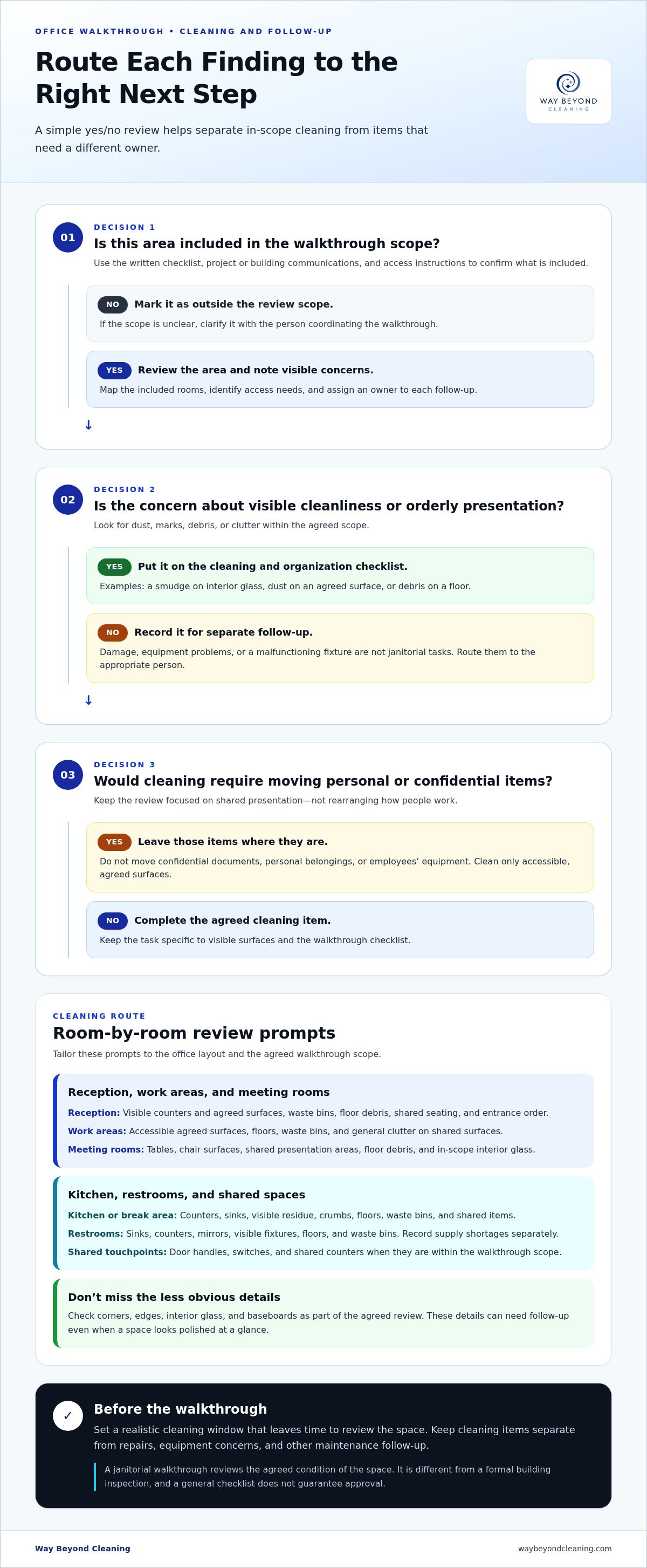
Use a Simple Timeline for the Final Office Walkthrough
A practical timeline keeps the walkthrough from becoming a rushed scramble. Work backward from the scheduled review, leaving enough time to finish cleaning and tidying before the final visual pass. Adapt the sequence to your office size, access needs, and the walkthrough scope.
- 1. Confirm the scope and access. Review the instructions, identify the included rooms and shared areas, and note the scheduled time. Arrange access to controlled areas and identify rooms that need special coordination. If the scope or timing is unclear, resolve those details with the person organizing the walkthrough before assigning tasks.
- 2. Prepare the space and plan the work. List room priorities, available supplies, and areas that require coordination. Clear movable clutter where appropriate, while identifying confidential documents, personal items, or equipment that should remain undisturbed. Share the checklist and responsibilities so everyone knows what they’re handling.
- 3. Complete cleaning and tidying. Follow the room list, addressing visible dust, marks, debris, bins, and shared surfaces. Finish these tasks before the walkthrough starts. A review scheduled while people are still cleaning can interrupt the work and make it harder to see the office in its prepared condition.
- 4. Conduct a calm final review. Once cleaning is complete, walk through the office using the same route as the checklist. Include shared spaces so they aren’t overlooked. Look for details that need another cleaning pass, but don’t treat the review as a guarantee of any inspection outcome.
- 5. Record and route unresolved concerns. Note remaining cleaning items, damage, supply shortages, or equipment concerns, and direct each to the person responsible for follow-up. Keep maintenance issues separate from cleaning tasks so they don’t get lost in the checklist.
This sequence makes preparing your office for final inspection easier to coordinate: confirm what’s included, arrange access, complete the cleaning, then review and track anything outstanding. For more perspective on organizing workplace cleaning, explore this guide to commercial janitorial services.
Way Beyond Cleaning provides commercial cleaning services for offices in Fairfield, Litchfield, and New Haven Counties in Connecticut, and Westchester County in New York. Recurring janitorial support helps keep cleaning on a regular schedule instead of leaving every task until walkthrough day.
Maintain Office Inspection Readiness with Local Janitorial Support
A final walkthrough is easier to approach when cleanliness is part of the workplace routine, rather than a major project squeezed into the days beforehand. Recurring janitorial care addresses visible dust, marks, and debris as part of ongoing maintenance, while helping keep shared areas orderly between scheduled reviews. It can’t guarantee an inspection outcome, but it can reduce the buildup that makes last-minute preparation feel overwhelming.
Why recurring janitorial care can simplify future walkthroughs
A consistent cleaning plan gives reception areas, workspaces, kitchens, restrooms, and other shared rooms regular attention according to the agreed scope. The workplace can feel more composed day to day, not only on walkthrough day. With a familiar routine, it’s also easier to spot a change, such as a new stain or maintenance concern, and route it for follow-up.
For more perspective on creating a comfortable, cared-for workplace, read this Fairfield office cleaning guide. A wellness-minded approach considers how a clean, orderly environment supports the people who use it, as well as how the space looks.
Plan commercial cleaning around your office’s needs
Every office has its own pattern of use. A layout with frequent meetings may need particular attention in shared rooms, while a workplace with busy break areas may prioritize counters, sinks, floors, and waste points. The right recurring scope reflects the office type, how each room is used, and the business’s priorities. Set frequency and task details according to that plan instead of assuming every workplace needs the same routine.
Way Beyond Cleaning provides commercial janitorial and office cleaning services in Fairfield, Litchfield, and New Haven Counties in Connecticut, as well as Westchester County in New York. Recurring support is customized around square footage and frequency of visits. A steady cleaning structure can help teams spend less time organizing a last-minute reset and can be adjusted as office use or priorities change.
Preparing your office for final inspection becomes more manageable when routine upkeep and a clear review process work together. Explore office cleaning services for ongoing support with your workplace cleaning routine.
Make Your Next Walkthrough Feel More Manageable
Inspection readiness starts with a clear scope and a steady process. Confirm which rooms are included, use a room-by-room checklist to address visible dust, marks, and clutter, then leave time for a final review. Keep cleaning tasks distinct from repairs, equipment concerns, and other issues that need separate follow-up.
Preparing your office for final inspection doesn’t have to mean a last-minute reset. Consistent upkeep can help maintain a more orderly workplace between walkthroughs, while a tailored cleaning plan accounts for your office layout, how each space is used, and your priorities. Cleaning supports a well-presented environment, but it can’t guarantee an inspection result.
Way Beyond Cleaning provides commercial janitorial and office cleaning services in Fairfield, Litchfield, and New Haven Counties in Connecticut, and Westchester County in New York. Give your team more room to focus on its work with commercial office cleaning services. A clear routine can make the next walkthrough calmer and easier to prepare for.
Frequently Asked Questions
What should be included on an office final inspection checklist?
Include the rooms and shared spaces in the walkthrough scope, along with visible surfaces and presentation details to review. Depending on the office, that may mean reception, work areas, meeting rooms, kitchens, restrooms, interior glass, floors, and waste areas. Add access notes and assign responsibility for each cleaning task. Keep a separate section for repairs, equipment concerns, or supply needs so they’re routed to the right person.
How do I prepare my office for a final inspection?
Start by reviewing the walkthrough instructions, confirming which areas are included, and arranging access to controlled rooms. Then organize cleaning by room, clear movable clutter where appropriate, and leave personal or confidential materials undisturbed. Complete cleaning before doing a final visual review. Preparing your office for final inspection this way gives the team a clear sequence and makes it easier to record issues that need separate follow-up.
How soon before a final inspection should an office be cleaned?
Plan the cleaning schedule around the office’s size, use, access needs, and walkthrough scope. Leave enough time to complete the agreed cleaning and tidying before the review begins, with a separate window for a calm final pass. There isn’t one timing rule for every workplace. Scheduling the walkthrough while cleaning is still underway can make coordination harder and prevent reviewers from seeing the prepared space.
Can professional office cleaning help prepare for a final walkthrough?
Yes. Professional office cleaning can help address agreed cleaning tasks across work areas and shared spaces, giving your team more time to focus on access, organization, and follow-up items. Way Beyond Cleaning provides commercial janitorial and office cleaning services in Fairfield County and nearby service areas. Cleaning can support a well-presented workplace, but it can’t guarantee a particular inspection result or resolve repairs and operational concerns.
What areas are most often overlooked before an office inspection?
Small, less-visible areas can be easy to miss during a quick room scan. Check corners, floor edges, baseboards, chair legs, door handles, switches, ledges, and interior glass for dust or marks. Also look around waste and recycling areas for residue, spills, or misplaced items. Review surfaces from normal viewing angles and use the available light, while keeping confidential papers and personal belongings undisturbed.
Should I include repairs on my office cleaning checklist?
Record repairs, but keep them separate from cleaning tasks. Dust, fingerprints, and removable residue belong on the cleaning list; a leak, broken fixture, damaged surface, or malfunctioning piece of equipment needs follow-up from the responsible maintenance or operations person. Note the location and a short description so the issue is clear. Cleaning can improve visible cleanliness, but it doesn’t repair damage or address building or safety requirements.
Can recurring janitorial service help keep an office ready for inspection?
Recurring janitorial service can help maintain more consistent cleanliness between walkthroughs by addressing agreed tasks as part of an ongoing routine. The appropriate scope depends on office layout, how rooms are used, and business priorities. Regular attention may reduce the amount of last-minute cleaning needed, while a separate walkthrough checklist can still help identify new concerns. Janitorial cleaning supports readiness, but doesn’t guarantee an inspection outcome.


