

What if recurring office cleaning complaints aren’t simply a sign that someone missed a task, but a clue that expectations and service standards aren’t aligned? When restrooms feel neglected, bins overflow, or shared spaces stay dusty after a report, it’s understandable to lose confidence. Solving common office cleaning complaints starts with identifying whether the issue relates to the agreed scope, cleaning frequency, communication, or follow-through.
You shouldn’t have to raise the same concern repeatedly or turn a practical conversation into a confrontation. A clear, constructive approach helps you describe what’s wrong, agree on priorities, and check whether a correction lasts.
This guide explains how to trace repeat complaints to their cause, communicate specific expectations, and verify improvements. You’ll also learn when a recurring janitorial arrangement tailored to your office space and cleaning frequency may be a better fit. For Fairfield County workplaces, clear expectations can help managers and their cleaning provider focus on the same priorities.
Key Takeaways
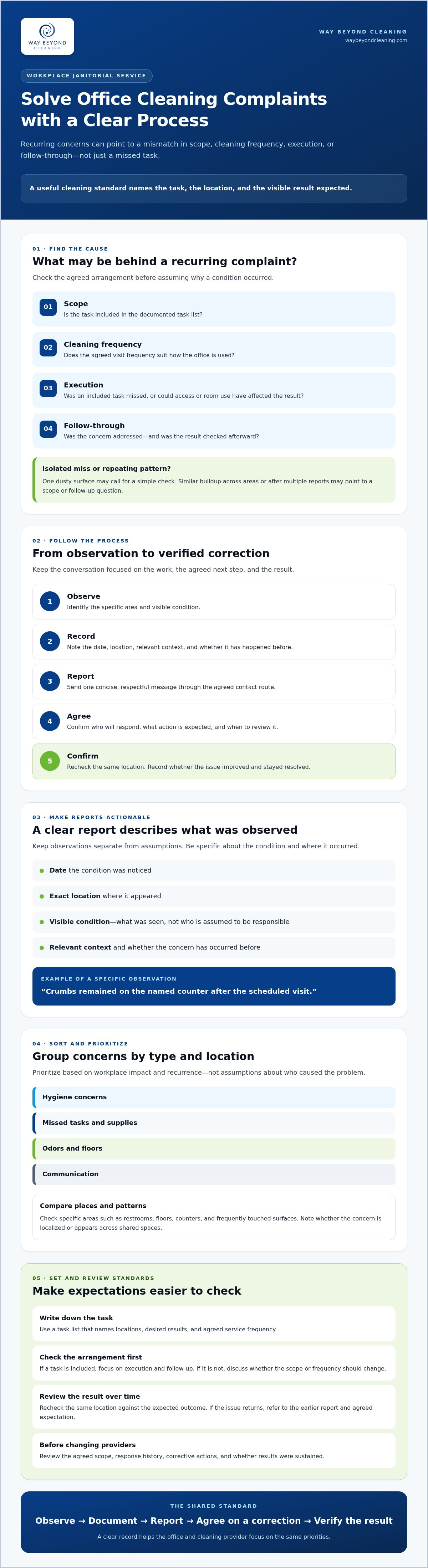
- Look beyond the visible mess to check whether the issue may stem from unclear scope, cleaning frequency, execution, or follow-up.
- Make reports easier to act on by noting the date, location, condition, and whether the concern has occurred before.
- Use solving common office cleaning complaints as a structured process: agree on a specific next step, then check whether the correction lasts.
- Set clearer expectations with a written task list that names locations, desired results, and agreed service frequency.
- Before changing providers, review the agreed scope, response history, corrective actions, and sustained results.
Why common office cleaning complaints recur, and what they reveal about service
Reporting the same issue again is frustrating, especially when employees are trying to focus and shared spaces should be ready to use. A lingering concern doesn’t automatically mean someone failed. The task may not be included in the agreed scope, the visit frequency may not suit how the office is used, execution may vary, or no one may have confirmed that the original concern was addressed.
Start by distinguishing an isolated miss from a pattern. A single dusty surface in a shared kitchen may call for a simple check. Similar buildup appearing repeatedly, across different areas, or after multiple reports points to a question about scope or follow-up. Compare specific locations, such as restrooms, floors, counters, and frequently touched surfaces, to determine whether the concern is localized or part of a broader service gap. Cleaning methods vary by task and setting; this overview of fundamental cleaning methods offers useful context, but your office’s agreement is the place to confirm what should be done.
A useful cleaning standard names the task, the location, and the visible outcome expected. That clarity makes a concern easier to discuss without assigning blame prematurely.
Which office cleaning problems deserve immediate attention?
Sort reports into practical categories: hygiene concerns, missed tasks, supplies, odors, floors, and communication. Then note where the issue appears and how often. Is it limited to one restroom, reported after one visit, or visible in several shared areas? Prioritize based on workplace impact and recurrence, not assumptions about who caused the problem. A specific description gives the person reviewing the concern something concrete to investigate.
Is the issue poor cleaning or an unclear service expectation?
Compare what employees observed with the agreed task list and visit frequency. A counter left uncleaned may indicate a missed task, but it may also be outside the documented scope. Consider whether access, occupancy, or a change in how a room is used could affect the result. Don’t assume every surface or supply task is included. Check the agreement first.
This distinction is central to solving common office cleaning complaints constructively. Record what happened, where it occurred, and whether it has happened before, then check the agreement before requesting a change. If the task is included, focus the conversation on execution and follow-up. If it isn’t, discuss whether the scope or frequency should be adjusted. Keep expectations tied to the documented arrangement.
How to resolve an office cleaning complaint with a clear follow-up process
A clear process turns a frustrating report into something your cleaning contact can investigate. Keep it simple: observe the condition, record the details, report it through the agreed contact route, agree on a corrective action, and confirm the result. This sequence keeps the conversation focused on the work rather than blame.
- Observe: Identify the specific area and visible condition.
- Record: Note the date, location, relevant context, and whether the concern has occurred before.
- Report: Send one concise, respectful message through the agreed channel.
- Agree: Confirm who will respond, what action is expected, and when to review it.
- Confirm: Recheck the same location and record whether the issue improved and stayed resolved.
Observe, document, report, agree on a correction, then verify the result. This gives the office and cleaning provider a shared record, helping make solving common office cleaning complaints more constructive and consistent.
What should an office cleaning complaint include?
Be precise. Instead of writing “the breakroom wasn’t clean,” describe what you saw, such as crumbs remaining on a named counter after the scheduled visit. Include the date, exact location, relevant context, and whether you’ve raised the same concern before. Keep observations separate from assumptions: report the condition without guessing who caused it or why.
How should managers confirm that the fix worked?
After the agreed correction, recheck the same spot against the expected outcome. Note whether the condition improved and whether it remained resolved at the next review. If it recurs, share the earlier report and agreed expectation so the follow-up can address a pattern rather than restart the discussion. A consistent evaluation framework can help teams clarify expectations; ISSA offers information on industry cleaning standards, while your own service agreement should define the tasks and outcomes relevant to your office.
If reports keep revealing a mismatch between office needs and the agreed arrangement, review the task scope and visit frequency with your provider. A recurring janitorial plan tailored to the office space and service frequency may help bring expectations into clearer alignment. Explore commercial cleaning services as one option to consider.
How to solve common office cleaning complaints by issue
A visible problem is a starting point, not a diagnosis. A missed surface might be outside the agreed scope, difficult to access, or unintentionally overlooked. Use the table to turn each concern into a specific check with your cleaning provider. The possible gaps are prompts for discussion, not conclusions about what happened.
| Issue | Possible service gap | Next question |
|---|---|---|
| Missed surfaces or dust | The task may not be listed, access may have been limited, or execution may have varied. | Is this surface included, and could anything have prevented access? |
| Restroom supplies | Restocking or supply provision may not be part of the arrangement, or the agreed monitoring process may need clarification. | Who provides supplies, and what restocking frequency was agreed? |
| Overflowing bins | Waste removal may not match the bin location, use, or agreed schedule. | Which bins are included, and how often should they be emptied? |
| Odors or residue | The area may need a closer review, or the task or method may not match the surface or concern. | Can the provider review the affected area and confirm the agreed cleaning approach? |
| Floors or inconsistent results | The scope, frequency, access, or consistency of execution may need checking. | Does the same location show the same condition across visits? |
What can managers do about restroom and supply complaints?
Note which dispenser or surface needs attention and where it is located. Then check the agreement before assigning responsibility: replenishment and supply provision may be handled differently depending on the arrangement. Ask the provider to review the agreed restocking frequency and how the team monitors it. For workplace sanitation context, consult OSHA’s sanitation requirements, while confirming the specific responsibilities and tasks in your own agreement.
How can offices address missed floors, dust, odors, or trash?
Describe the exact area and condition, such as residue along a named floor section or dust remaining on a particular ledge. Confirm that the relevant task and frequency are included, and ask for a review of the area and cleaning method. If the same issue returns, compare that location across visits and share specific examples. This makes solving common office cleaning complaints a practical review of scope and results, rather than a broad judgment about service quality.
How to prevent recurring office cleaning complaints with clearer standards
Prevention begins with a shared reference point. A written task list makes expectations visible to office managers, employees, and the cleaning provider, reducing reliance on memory or informal assumptions. It should name priority locations, describe the expected result, and state the agreed service frequency for each task.
What should an office cleaning checklist clarify?
Make the list specific to how your workplace operates. Identify priority rooms and surfaces, such as restrooms, shared spaces, floors, and waste areas. Note which tasks are included and how often they’re expected. Clarify how the agreement handles supplies, access restrictions, or other exceptions, so employees know what to report and managers know when a scope discussion may be needed.
Keep two categories distinct: routine tasks already covered by the arrangement, and requests that may require a change to scope or frequency. If a shared area sees heavier use than before, for example, discuss whether the current schedule still fits. That change in use doesn’t automatically mean an agreed task was missed.
How can a recurring review keep standards realistic?
Set a brief recurring review with the appropriate office contact and cleaning provider. Look at repeat reports, completed corrective actions, and concerns that remain unresolved. Then consider whether occupancy, layout, or the way people use particular spaces has changed. Adjust expectations through the agreed service process, rather than relying on scattered messages that can leave priorities unclear.
Give employees one consistent channel for reporting observations. Ask them to identify the location, visible condition, and date, rather than sending general complaints through multiple informal routes. That creates a clearer record and helps managers spot patterns without treating every isolated concern as a service failure.
Clear standards should support more than appearance. A considered cleaning plan can contribute to a workplace that feels orderly, cared for, and comfortable to use. For further perspective on broader office-cleaning expectations, refer to the existing Fairfield office-cleaning wellness guide. A tailored recurring arrangement can also help align tasks and visit frequency with the space. Learn more about commercial office cleaning services. With shared expectations in place, solving common office cleaning complaints becomes a matter of reviewing clear evidence and refining the arrangement when workplace needs change.
When to reset office cleaning expectations or review your janitorial partner
One complaint doesn’t automatically mean your cleaning provider is the wrong fit. First look at what was agreed, how the concern was handled, and whether the same issue continues after a clear corrective action. A single miss may call for follow-up. A recurring pattern that persists despite specific reports and agreed next steps may warrant a broader review.
Before deciding, compare four things: the documented service scope, your reporting history, the corrective actions taken, and whether results have lasted. This helps distinguish an execution problem from a change in office needs or a task that was never included. If occupancy, layout, or priorities have shifted, ask whether the current scope and service frequency still suit the space.
What signs suggest a service reset may be enough?
A reset may be appropriate if the concern is clear but wasn’t part of the original task expectations, or if employees now use the office differently than when the arrangement began. It’s also constructive when both sides can agree on a specific adjustment, who will carry it out, and how you’ll review the result. Clear expectations give the partnership a fair chance to improve.
When should a business compare janitorial service options?
Consider comparing options if reports keep going unresolved after clear communication and agreed follow-up, or if responsibilities and ways to check corrections remain unclear. Review the record rather than relying on one frustrating incident: have the same issues returned, were next steps completed, and did the improvement last? A professional janitorial partner can help align service expectations with the office space and agreed visit frequency.
Use the same practical criteria with any prospective provider. Ask how the service scope will be defined, how changes in office use can be discussed, and how you’ll raise concerns and review outcomes. The goal isn’t simply to switch providers. It’s to establish a dependable arrangement that supports a cleaner, more comfortable workplace and gives your team greater confidence in shared spaces.
For Fairfield County businesses reviewing their office cleaning arrangement, explore commercial cleaning services. Comparing scope, communication, and follow-through can make solving common office cleaning complaints a more measured decision, whether that means refining the current agreement or considering a new janitorial partner.
Build a More Reliable Cleaning Partnership
Recurring complaints are easier to resolve when you treat them as useful signals. Identify whether the issue stems from the agreed scope, service frequency, execution, or follow-up, then document what you observe and confirm whether the correction lasts. Clear task expectations and a consistent review process help turn repeated frustration into practical decisions about what the office needs.
That’s the heart of solving common office cleaning complaints: align visible results with clear expectations, and revisit the arrangement when your workplace changes. One report may call for a simple adjustment. A pattern of unresolved concerns may signal that it’s time for a broader conversation.
Way Beyond Cleaning provides commercial janitorial and office cleaning services, with recurring agreements tailored around office square footage and visit frequency. The company serves Fairfield County and other nearby counties in Connecticut and New York, including Litchfield and New Haven Counties and Westchester County. Explore commercial cleaning support for your office and take a considered next step toward a cleaner, more dependable workplace.
Frequently Asked Questions
What are the most common office cleaning complaints?
Common office cleaning complaints include untidy or poorly stocked restrooms, overflowing bins, dusty surfaces, unpleasant odors, and messy shared kitchens. Employees may also report floors that appear dirty or sticky, missed areas, or concerns that receive no follow-up. The visible issue is only a starting point: check the location, whether it recurs, and whether the task is included in the agreed cleaning scope before deciding what needs to change.
How should I report a recurring office cleaning problem?
Report it through the contact route agreed with your cleaning provider, using specific, neutral details. Include the date, exact location, visible condition, and whether you’ve raised the same concern before. For example, describe residue remaining on a particular breakroom counter rather than simply calling the room “unclean.” Solving common office cleaning complaints is easier when both sides can review clear observations, agree on a next step, and confirm who will follow up.
What should I do if the cleaning issue keeps happening after I report it?
Refer to your earlier report and ask the provider to agree on a specific corrective action and a time to review the result. Recheck the same area afterward, then record whether the condition improved and stayed resolved. If the issue returns, share the pattern along with the agreed expectations. This helps identify whether the problem involves execution, service scope, frequency, or follow-up, without relying on general complaints or assumptions.
Can office cleaning complaints be caused by an unclear service scope?
Yes. A complaint may reflect a task that isn’t listed in the agreement, a frequency that no longer suits how the office is used, or a difference in expectations about the result. Compare the reported condition with the documented task list and visit schedule. If office use or priorities have changed, discuss whether the scope should be adjusted. Don’t assume a task is included until you’ve checked the arrangement.
How often should an office review its cleaning checklist?
Choose a review rhythm that fits the office and revisit the checklist when needs change. A brief recurring check-in can compare recent reports, completed corrections, and unresolved concerns. Review sooner if occupancy, layout, or use of shared spaces shifts. Make sure the checklist identifies locations, tasks, expected outcomes, and agreed service frequency. This keeps standards practical and gives employees a clear reference for reporting concerns.
What happens if the cleaning provider does not resolve a complaint?
First, confirm the task and expected result in the service agreement, then share the report history and ask how the provider will address and review the concern. If responsibilities or follow-up remain unclear, consider whether a scope reset or comparison of service options is appropriate. In Fairfield County, Way Beyond Cleaning provides commercial janitorial and office cleaning services, with recurring agreements tailored around office square footage and visit frequency.
Should I change cleaning companies because of one missed task?
Not necessarily. One missed task may call for a clear report and agreed correction, rather than an immediate change in provider. Assess how the concern is handled and whether it recurs after follow-up. If similar problems continue despite clear expectations, review the documented scope, response history, corrective actions, and lasting results. A broader review can help you decide whether to adjust the current arrangement or compare janitorial partners.


