

The spaces customers never see can still affect how smoothly a store runs. Stockrooms, receiving areas, and staff spaces are used throughout the day, but deliveries and shift changes can make them easy to overlook. A practical approach to back-of-house cleaning for stores Norwalk CT starts by identifying the work areas and setting priorities for each one.
This checklist helps you identify what different behind-the-scenes areas need, from stockroom floors and receiving zones to shared staff spaces. It also explains how to shape a recurring cleaning scope around your store’s layout, delivery patterns, and operating schedule. Way Beyond Cleaning provides retail-space cleaning and commercial janitorial services tailored to the space and service frequency. Use the steps below to make overlooked tasks visible, create a consistent plan, and keep the areas that support your team ready for daily operations.
Key Takeaways
- List stockrooms, receiving zones, and staff areas separately so cleaning needs are easy to identify.
- Distinguish routine priorities from tasks that managers want to review periodically.
- Use area use, traffic, staffing, and delivery patterns to set priorities around store operations.
- Prepare a practical service brief by listing spaces, access considerations, and operating constraints.
- Use a clear checklist to guide back-of-house cleaning for stores Norwalk CT and define a recurring retail cleaning scope.
Back-of-House Cleaning for Stores in Norwalk, CT: What It Covers
Keeping staff spaces usable while customer-facing operations continue takes coordination. Back rooms support receiving, storage, and employee routines, but their cleaning needs can be less visible than those of a storefront or sales floor. Listing these areas separately brings them into the store’s regular cleaning plan.
Back-of-house cleaning is recurring care for a store’s non-public work and support areas, planned around the spaces employees use and the priorities managers identify. It complements customer-area cleaning rather than repeating a general retail checklist. A storefront plan focuses on places shoppers encounter; a back-of-house scope names the staff-only spaces that also need attention. This overview of commercial cleaning offers broader context, while the store’s layout determines how cleaning applies behind the scenes.
Which store areas count as back of house?
Possible zones include stockrooms, receiving areas, staff break areas, and employee restrooms. Your store may have all of these, only some, or other staff-only spaces that support daily work. The layout and use of each area determine what belongs in the cleaning scope. Start by walking through the actual spaces rather than assuming every store has the same floor plan.
Why give staff-only spaces their own cleaning scope?
When cleaning plans focus mainly on customer-facing areas, less-visible spaces can be missed. Naming each back-of-house zone makes its needs easier to track and helps managers define what recurring service should cover. It also gives employees a clearer picture of how shared work areas are maintained and gives managers a specific scope to review when store operations change.
A written scope can identify which areas are included and distinguish them from the sales floor and storefront. That gives store teams and cleaning partners a shared reference instead of relying on memory or informal handoffs. For back-of-house cleaning for stores Norwalk CT, this clarity turns a broad request into a practical plan suited to the store’s space and service frequency. Way Beyond Cleaning’s recurring retail-space janitorial service can be tailored around those priorities.
A Back-of-House Store Cleaning Checklist for Norwalk Retail Teams
A useful checklist reflects the spaces your team actually uses, not a standard template applied to every shop. Consider how each area is used, when it is accessible, and which tasks belong in routine service versus periodic review.
Stockroom and receiving-area priorities
Deliveries and stored goods can affect access to stockroom and receiving areas. As you define cleaning priorities, note when these spaces are workable and which surfaces or floor areas remain accessible. Keep the scope focused on cleaning the space, not inventory handling or machinery.
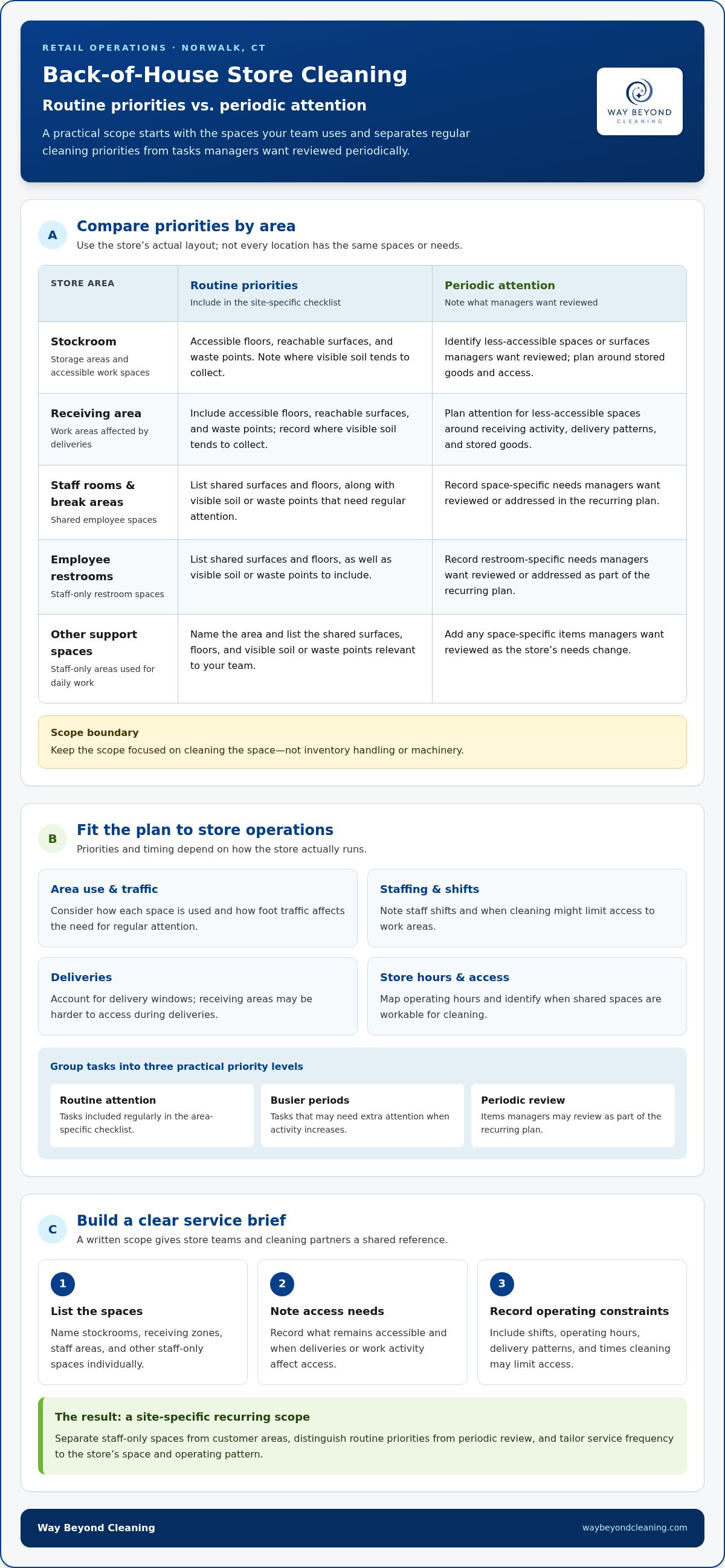
- Routine priorities: Include accessible floors, reachable surfaces, and waste points in the site-specific checklist. Note where visible soil tends to collect.
- Periodic attention: Identify less-accessible spaces or surfaces that managers want reviewed as part of the recurring scope. Plan how to address them around receiving activity and stored goods.
Specific notes help employees understand what needs to remain accessible and let managers coordinate cleaning with delivery patterns without prescribing the same time window for every store.
Staff rooms, employee restrooms, and shared support spaces
Break areas and employee restrooms may be included in a retail janitorial scope, along with other shared support spaces. For each area, note the shared surfaces, floors, and visible soil that matter to your team. OSHA’s sanitation standards provide workplace sanitation context, including provisions related to restrooms and housekeeping.
- Routine priorities: List shared surfaces and floors that need regular attention, along with visible soil or waste points to include.
- Periodic attention: Record space-specific needs that managers want reviewed or addressed as part of the recurring plan.
Keep the notes practical. A break area with shared tables has different cleaning priorities from an employee restroom or a small support room. Listing each space separately makes those differences clear.
For back-of-house cleaning for stores Norwalk CT, separate routine priorities from tasks managers may schedule for periodic attention. Review the list against each area’s access, use, and delivery activity, then record the scope in plain language. Way Beyond Cleaning’s retail-space cleaning services can be tailored to a store’s space and service frequency, helping managers turn those priorities into a recurring plan.
Matching Store Cleaning Priorities to Daily Operations
A useful cleaning plan works with the store’s rhythm. Area use, foot traffic, staffing, and deliveries all affect which spaces need regular attention and when cleaning can fit without interrupting work. A retailer in SoNo, for example, can map its own operating hours and delivery activity rather than assume its routine matches that of another nearby store.
Start by noting staff shifts, delivery windows, and times when cleaning might limit access to work areas. Then group tasks by priority: what needs routine attention, what may need extra attention during busier periods, and what managers can review periodically. This gives the team a practical framework without imposing the same schedule on every store.
Build a schedule around store hours and deliveries
Consider how employees use each back-of-house space across the workday. A receiving area may be harder to access during deliveries, while a shared staff space may be easier to include at another point in the schedule. Recurring service frequency can be tailored to the store’s space and needs, with priorities revised as activity changes. For broader business-cleaning context, see this commercial janitorial services guide.
Separate regular priorities from periodic review
Not every task belongs on the same recurring schedule. Use the table to identify what matters in your store, then adapt it to how each area is used. OSHA’s general requirements for workplace safety include provisions on keeping workplaces orderly and addressing hazards, offering useful context for workplace housekeeping.
| Planning category | Examples to consider |
|---|---|
| Routine priorities | Accessible floors, shared surfaces, and waste points in areas identified in the cleaning scope. |
| Busier periods | Receiving activity, heavier use of staff spaces, or changes in access that may affect which tasks are practical. |
| Less-frequent review | Reassessing spaces or priorities after a change in layout, staffing, or store activity. |
When store operations shift, revisit the scope instead of relying on an outdated plan. A rearranged stock area, different staffing pattern, or change in delivery activity may alter access and priorities. A tailored recurring plan connects the space, its use, and service frequency without assuming a universal interval.
How to Prepare a Norwalk Store for Reliable Back-of-House Cleaning
A clear service scope starts with the store’s actual spaces and daily demands. Preparing an area list helps managers explain what needs attention, where access may be limited, and how recurring cleaning can fit around work already in motion.
Create a useful site-specific area list
Begin with a simple inventory of staff-only areas. Name each space, note how employees use it, and record the cleaning priorities that matter there. For example, list a stockroom separately from a staff break area rather than grouping both under “back room.” That detail makes the scope easier to review and keeps smaller support spaces from disappearing in a general request.
- List the areas: Include the store’s relevant stock, receiving, break, restroom, and other support spaces.
- Describe priorities: Note the surfaces, floors, or visible conditions that need attention in each area.
- Map access considerations: Identify when spaces are accessible and which store activities need to continue uninterrupted, such as receiving deliveries or staff handoffs.
- Keep sensitive details separate: Describe the work and access considerations without including sensitive operational information in general cleaning instructions.
This area list gives managers a practical starting point for discussing back-of-house cleaning in Norwalk. It also makes it easier to revise the scope as store use changes, without relying on informal reminders.
Turn the checklist into a recurring service scope
Next, group the area list into a clear recurring scope. Identify routine priorities, tasks for periodic review, and operating constraints that affect access. Then set service frequency to reflect the store’s space and needs instead of assuming one schedule works for every retail location.
Way Beyond Cleaning customizes recurring service billing based on square footage and visit frequency. A well-prepared list connects those factors to the store’s actual back-of-house priorities and gives managers a clear reference for the recurring janitorial agreement. Keep the scope readable and specific, then revisit it when the layout, staffing, or store activity changes.
Key inputs are the areas, priorities, operating schedule, and service frequency. Use them to shape a tailored plan, then explore commercial cleaning services for your Norwalk store.
Back-of-House Cleaning for Norwalk Stores: Plan Your Next Step
A practical cleaning plan begins with a clear picture of the spaces behind the sales floor. When managers list areas, rank priorities, and plan around store operations, they create a useful brief for recurring service. The brief gives the discussion a grounded starting point: what the store needs, where access matters, and how often service should take place.
What to include in a store cleaning brief
Keep the brief concise but specific enough to reflect the actual retail space. Include:
- Areas: Name the back-of-house spaces included, such as stockrooms, receiving areas, break areas, or employee restrooms.
- Priorities: Identify routine cleaning needs and any areas managers want reviewed periodically.
- Access timing: Note delivery windows, staff shifts, and store activities that should continue uninterrupted.
- Desired recurring frequency: Describe the service frequency that suits the space and its use.
This structure turns a general request into a tailored scope. It also gives managers a reference to revisit if the store layout, staffing, or daily activity changes. The goal is a plan that reflects how the business operates, not a generic list detached from the space.
Explore recurring retail cleaning in Fairfield County
Way Beyond Cleaning provides retail-space cleaning and commercial janitorial services in Fairfield County, including Norwalk. Recurring service agreements are tailored to the space and service frequency, giving managers a way to define and maintain back-of-house priorities as part of an ongoing plan.
With the brief in hand, the next step is to discuss the store’s cleaning needs and how they fit into a recurring service scope. Explore commercial cleaning services from Way Beyond Cleaning to shape retail janitorial support around your space and priorities. Clear expectations bring more order to work behind the scenes and leave store teams more time for daily operations.
Give Your Store a Clearer Cleaning Plan
A dependable back-of-house plan starts by naming each staff-only area, setting priorities, and fitting recurring service around deliveries and store operations. This makes overlooked work visible and gives managers a clear brief to revisit as the space or its needs change. A tailored scope can help keep support areas orderly and ready for the workday.
Way Beyond Cleaning provides commercial janitorial services for retail spaces and serves Fairfield County, including Norwalk. Recurring agreements are customized based on square footage and visit frequency, so the plan can reflect your store’s space and service needs.
Take the next step with a clear list of your spaces, priorities, and operating schedule. Discuss a tailored cleaning plan for your store with Way Beyond Cleaning and create a more manageable approach to the work behind the scenes.
Frequently Asked Questions
What does back-of-house cleaning for a store include?
Back-of-house cleaning covers recurring care for a store’s non-public work and support areas. Depending on the layout, that may include stockrooms, receiving areas, staff break areas, and employee restrooms. A store-specific scope can identify priorities such as accessible floors, shared surfaces, and waste points. Managers can define the spaces and tasks based on how their team uses them.
How often should a retail store clean its back-of-house areas?
There isn’t one schedule that fits every store. Cleaning frequency can reflect how each area is used, store traffic, staffing, delivery activity, and the priorities managers identify. A receiving area with changing access needs may require different planning from a staff room. Review the scope as operations change, then set recurring service frequency around the store’s space and needs rather than relying on a universal interval.
Can back-of-house cleaning happen without disrupting store operations?
Managers can help cleaning fit the workday by identifying staff shifts, delivery windows, access considerations, and activities that should continue uninterrupted. These details give the recurring plan a practical framework and clarify when each space is workable. The schedule should reflect the store’s operations, not assume every area is accessible at the same time. Clear communication helps coordinate cleaning priorities with daily work.
How do I make a back-of-house cleaning checklist for my store?
Start by listing each staff-only area, then note how employees use it and which cleaning priorities matter there. Separate routine priorities from tasks managers may schedule for periodic review. Add access timing and delivery considerations, and distinguish back rooms from storefront and sales-floor areas. This list gives your team a clear starting point for a recurring scope tailored to the actual retail space.
Should stockrooms and receiving areas be part of retail janitorial service?
Yes, stockrooms and receiving areas can be included in a retail janitorial scope when they are part of the store’s cleaning needs. Managers can note accessible floors, surfaces, and waste points while accounting for stored goods and delivery activity. The scope should reflect the layout and access of each space. This brings less-visible work areas into the recurring plan instead of leaving them outside general priorities.
How can a Norwalk store plan cleaning around deliveries?
Map delivery windows alongside staff shifts and times when cleaning could interrupt receiving or access to stored goods. Then identify which areas are workable at different points in the store’s schedule and include those constraints in the service brief. SoNo retailers, like other Norwalk stores, can use their own delivery patterns as planning inputs. The schedule should reflect the store’s activity rather than assumptions about the neighborhood.
Can recurring janitorial service be tailored to a store’s size and cleaning frequency?
Yes. Way Beyond Cleaning customizes recurring service billing based on square footage and visit frequency, allowing the agreement to reflect the store’s size and service needs. Commercial janitorial services include retail spaces, and the company serves Fairfield County, including Norwalk. A clear list of areas, priorities, and operating considerations helps shape a practical recurring scope for the store.


