

What if the sharp, chemical scent welcoming your team each morning isn't proof of sanitation, but a quiet threat to their vitality? Traditional janitorial chemicals leave behind volatile organic compounds that cloud indoor air and dull daily energy. Progressive commercial leaders recognize that modern sustainable cleaning practices for offices transform corporate facilities from sterile workspaces into restorative sanctuaries where teams genuinely thrive.
You already understand that employee wellness directly shapes your company's performance. Yet distinguishing between rigorous ecological standards and superficial greenwashing feels daunting, especially when you need uncompromised defense against stubborn office pathogens. Discover how modern sustainable cleaning practices enhance indoor air quality, safeguard employee health, and elevate commercial office performance without cutting operational corners.
In this 2026 guide, we explore the science behind low-emission sanitization, outline verifiable benchmarks that fulfill institutional ESG commitments, and examine how partnering with a meticulous commercial janitorial specialist protects your bottom line.
Key Takeaways
- Distinguish genuine ecological formulations from superficial greenwashing by prioritizing certified chemical transparency and systemic waste reduction.
- Implement high-performance sustainable cleaning practices for offices, including targeted bio-based surfactants and multi-zone color-coded microfiber systems that prevent cross-contamination.
- Boost workplace productivity and lower absenteeism by systematically eliminating volatile organic compounds and synthetic fragrances from your indoor air.
- Execute a structured commercial implementation blueprint starting with comprehensive chemical inventory audits and targeted traffic-pattern mapping.
- Partner with an experienced commercial janitorial specialist to maintain bespoke, wellness-centered protocols tailored to your corporate operational schedule.
What Defines Sustainable Cleaning Practices for Offices in 2026?
Cleanliness is not merely the absence of visible clutter. True commercial hygiene functions as an integrated, health-centered operational methodology that safeguards human vitality and environmental balance. Modern sustainable cleaning practices for offices move far beyond passive maintenance, treating corporate spaces as restorative sanctuaries where clean indoor air directly fuels cognitive performance. By deliberately shifting away from aggressive caustic compounds, facility managers protect delicate architectural finishes, preserve ergonomic furnishings, and ensure employees breathe pristine air throughout their workday.
Beyond Greenwashing: Recognizing Legitimate Ecological Standards
Superficial green marketing often disguises conventional formulas behind earthy packaging and vague claims. Authentic commercial protocols require rigorous chemical transparency backed by independent verification. Industry leaders rely on validated green cleaning techniques and products certified by reputable bodies such as Green Seal and the EPA Safer Choice program to ensure proven efficacy without toxic exposure.
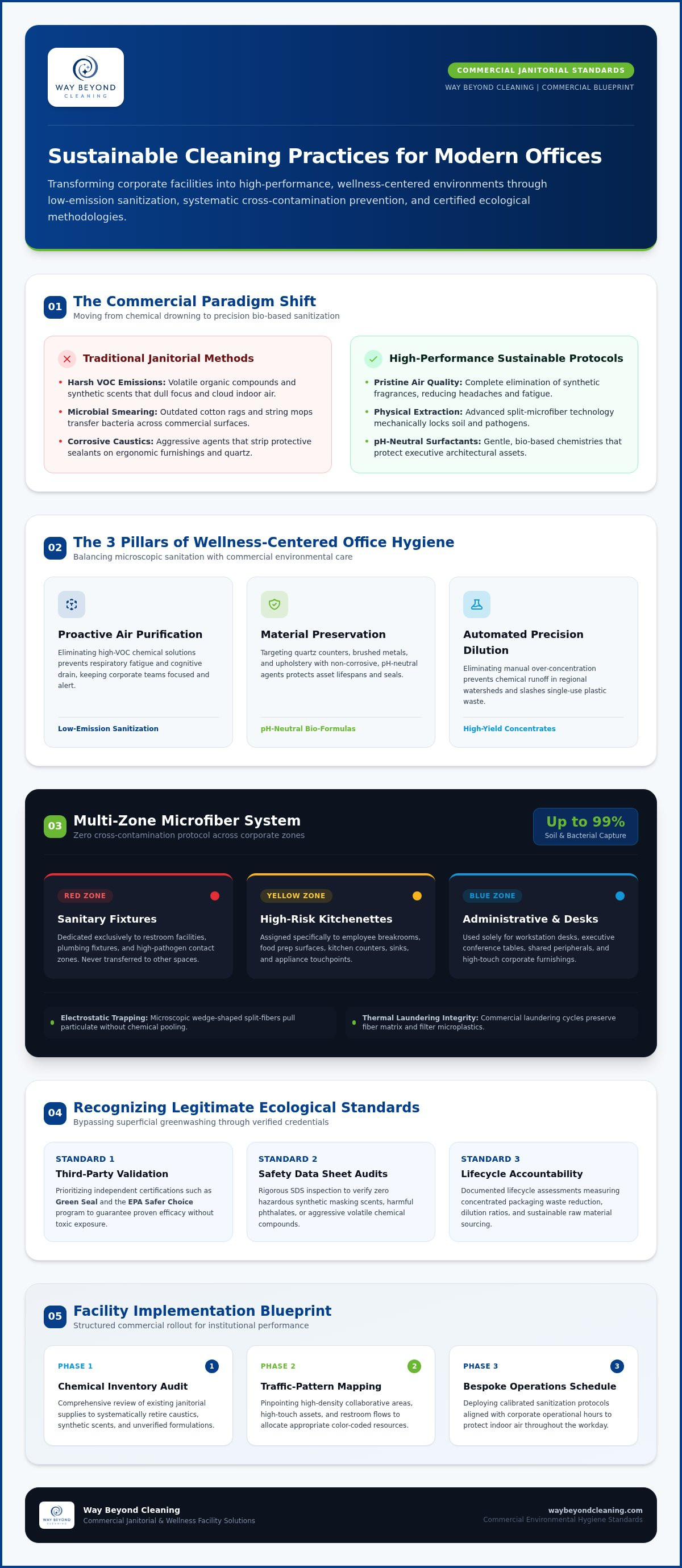
- Third-Party Validation: Prioritize certifications that verify non-toxicity, biodegradability, and minimal environmental impact across the entire product lifecycle.
- Safety Data Sheet Audits: Scrutinize Safety Data Sheets (SDSs) to confirm the complete elimination of hazardous synthetic masking scents, phthalates, and aggressive volatile compounds.
- Lifecycle Accountability: Distinguish between hollow eco-labels and documented lifecycle assessments that measure packaging waste, concentrated dilution metrics, and raw material sourcing.
The Core Pillars of a Wellness-Centered Cleaning Philosophy
A holistic sanitation protocol balances microscopic hygiene with gentle environmental care. Rather than saturating shared workspaces with harsh biocides, professional teams implement calibrated systems designed for long-term health and material preservation.
First, proactive indoor air purification relies on eliminating high-VOC solutions, preventing the persistent headaches and respiratory fatigue that silently erode workplace focus. Second, high-touch assets like composite quartz counters, brushed metals, and executive upholstery require pH-neutral, non-corrosive agents that sanitize thoroughly without stripping protective sealants. Finally, modern commercial facilities integrate automated dilution dispensers. These precision dispensers eliminate chemical over-concentration, slash plastic waste through high-yield concentrates, and prevent harsh runoff from entering regional watersheds, setting a higher standard for responsible corporate stewardship.
Essential Sustainable Cleaning Protocols for Modern Workspaces
Switching spray bottles does not make a facility green. Sustainable cleaning is an operational discipline rooted in physics, chemistry, and rigorous methodology. Executing high-performance sustainable cleaning practices for offices requires replacing outdated chemical drowning methods with targeted, bio-based surfactant chemistries and mechanical dirt capture. These structured protocols eradicate contaminants while transforming corporate workspaces into restorative, health-conscious environments.
Advanced Microfiber Systems and Cross-Contamination Prevention
Traditional cotton rags and string mops spread microbes across commercial surfaces. Premium split-microfiber filaments possess microscopic wedge-shaped structures that physically capture up to 99% of surface soil and bacteria through electro-static charge, minimizing reliance on heavy chemical biocides.
- Strict Color Zoning: Red cloths remain dedicated to sanitary fixtures, yellow for high-risk kitchenettes, and blue for administrative desks and executive conference tables.
- Mechanical Soil Removal: Fine split-fibers trap microscopic particulate matter within the weave rather than smearing dirt across shared desks.
- Thermal Laundering Integrity: Specialized commercial wash cycles preserve microfiber filament structure, maximize textile longevity, and filter laundry effluent to prevent microplastic shed.
Indoor Air Quality and High-Efficiency Particulate Air Filtration
Conventional commercial vacuums often function as particle agitators, exhausting fine dust and respirable allergens back into breathing zones. Professional sustainable cleaning relies on sealed, four-stage HEPA filtration equipment capable of trapping 99.97% of airborne particles down to 0.3 microns. By systematically capturing deep-pile dust and airborne irritants, your commercial janitorial team actively unburdens building HVAC systems, extending air handler life and keeping airflow clear and invigorated throughout the workday.
Restorative Touchpoint Hygiene for Communal Office Zones
Office wellness relies on smart restraint rather than blanket chemical saturation. Commercial technicians prioritize high-contact areas, such as elevator buttons, boardroom chair levers, biometric readers, and kitchen faucets. Instead of using corrosive bleach or quaternary ammonium formulations, modern teams apply portion-controlled, botanical sanitizers that fulfill the rigorous Green Seal certification standard.
Every non-toxic disinfectant demands specific dwell times, remaining visibly wet on touchpoints for several minutes to successfully neutralize pathogenic envelopes without off-gassing synthetic masking fragrances. For specialized facilities seeking dedicated corporate care, exploring expert commercial cleaning services ensures your team reaps the benefits of precision environmental upkeep every morning.
The Measurable Business Return of Sustainable Office Cleaning
Ecological janitorial care is not an overhead expense. It represents an active capital investment in human performance and asset longevity. When leaders embrace high-standard sustainable cleaning practices for offices, they unlock concrete economic gains. Unburdening indoor air from harsh residues safeguards team stamina, while non-corrosive botanicals preserve premium architectural finishes, translating eco-conscious protocols into measurable enterprise value.
Protecting Employee Health, Cognitive Focus, and Daily Attendance
Respiratory irritation, subtle migraines, and midday brain fog are frequent consequences of airborne solvent exposure. When commercial spaces replace synthetic fragrance masks with unadulterated botanical solutions, employees breathe pure air that supports mental clarity throughout grueling afternoons.
- Sharper Executive Output: Clean, low-VOC indoor air actively combats cognitive fatigue, helping teams sustain deep focus during demanding work cycles.
- Curbed Seasonal Absenteeism: Methodical touchpoint sanitation intercepts viral transmission vectors before illness cascades across open-concept desking.
- Psychological Serenity: A workplace free of heavy chemical odors fosters immediate subconscious calm, affirming to staff that their physical well-being is valued.
Elevating Brand Reputation and ESG Corporate Compliance
Corporate sustainability commitments demand verifiable operational proof across every tier of facility management. Today, institutional stakeholders and prospective commercial tenants scrutinize how daily maintenance aligns with documented environmental, social, and governance (ESG) goals. Adopting products recognized by the EPA's Safer Choice program ensures that chemical disclosures withstand regulatory scrutiny and support corporate green certifications.
First impressions matter immensely during high-stakes client visits. Entering a corporate suite that smells naturally fresh rather than medicinal immediately communicates elevated prestige and meticulous management. This standard of care preserves valuable property assets, protecting custom walnut joinery, delicate quartz countertops, and designer commercial carpets from premature degradation caused by aggressive chemical buildup. Exploring the core principles of dedicated office cleaning reveals how structured maintenance protects both your personnel and your high-end interior buildouts over the long term.
How to Implement Sustainable Cleaning: A Commercial Blueprint
Adopting eco-friendly office care requires a deliberate, methodical operational roadmap. You cannot simply instruct janitorial staff to grab different supplies and expect transformative results. Moving toward genuine sustainable cleaning practices for offices demands a structured transition plan that evaluates current chemical hazards, maps specific facility traffic patterns, and establishes unyielding performance benchmarks across daily building operations.
Auditing Current Supplies and Facility Touchpoints
Every successful commercial transition starts with an honest baseline audit. Facility directors must catalog existing custodial inventories to uncover hidden irritants, petroleum-based solvents, and synthetic aerosol fresheners that compromise your workplace breathing zone.
- Chemical Inventory Purge: Identify and eliminate harsh ammoniated strippers, chlorine sanitizers, and artificial masking agents, replacing them with concentrated, third-party verified botanical surfactants.
- Traffic Density Mapping: Chart movement across administrative zones, high-density open desks, executive boardrooms, and communal tea points to establish appropriate daily sanitization cadences.
- Hardware Capability Review: Inspect legacy commercial machinery, retiring unsealed vacuums in favor of calibrated HEPA units that prevent microscopic allergen recirculation.
Vetting and Selecting a Sustainable Janitorial Service
True environmental stewardship depends entirely on the integrity of the team executing the work. When interviewing commercial janitorial contractors, look past generic marketing promises to examine their day-to-day operational mechanics. Confirm that custodial technicians receive comprehensive training in mechanical dirt extraction, precise chemical dwell times, and strict cross-contamination protocols.
Ask prospective service providers detailed questions regarding their equipment care regimens, their textile laundering temperatures, and their quality oversight structures. A dependable vendor should readily provide structured supervisor audit checklists, detailed chemical dilution logs, and clear lines of client communication. If you want to establish an uncompromising standard of environmental wellness for your commercial space, explore how our dedicated team delivers premier commercial janitorial services tailored to your enterprise needs.
Partnering with Way Beyond Cleaning for Commercial Workspace Excellence
Your commercial workplace should inspire daily focus rather than drain human energy. While distant national janitorial conglomerates deploy rigid, one-size-fits-all contracts, regional enterprises require dedicated partners who understand their specific operational rhythms. Way Beyond Cleaning brings a wellness-rooted janitorial philosophy to modern enterprises across Fairfield County, CT. By treating workspace hygiene as an essential component of corporate health, we implement thoughtful sustainable cleaning practices for offices that safeguard your team and your corporate interior assets.
The Way Beyond Cleaning Commercial Standard in Fairfield County
Meticulous commercial maintenance requires quiet consistency and accountability. We construct tailored recurring service agreements designed around your corporate workflow, ensuring pristine results without interrupting daily operations.
- Customized Operational Scheduling: Janitorial care programs adapt to your specific building hours, whether your organization requires early morning preparation or structured evening service.
- Conscientious Commercial Custodians: Our dedicated commercial team approaches every facility with a guardian mindset, focusing on intricate details like air cleanliness, surface preservation, and zero chemical residues.
- Comprehensive Regional Capabilities: Discover our full suite of professional contract offerings on our dedicated services page to see how we maintain corporate facilities, retail environments, and professional suites.
Transforming Your Corporate Office into a Productive Sanctuary
Time is an irreplaceable corporate currency. When facility directors manage unpredictable cleaning staff or field constant employee complaints regarding harsh chemical smells, valuable executive attention is lost. Entrusting your commercial janitorial needs to a proven specialist allows leadership teams to concentrate entirely on enterprise innovation and business growth.
We believe clean spaces cultivate clear minds. You can explore our founding values and health-centered operational model by visiting our about page. If you are ready to elevate your corporate environment into a spotless, energizing sanctuary that reflects the high standards of your brand, contact Way Beyond Cleaning today to discuss a customized commercial janitorial partnership for your Fairfield County workspace.
Elevate Your Workplace Into a Restorative Sanctuary
Every commercial environment communicates a distinct corporate value. Prioritizing sustainable cleaning practices for offices does far more than satisfy baseline ESG benchmarks; it actively protects employee vitality, preserves luxury interior architecture, and removes invisible chemical stressors from daily operations. When your facility moves away from synthetic odor masks in favor of disciplined mechanical capture and bio-based chemistries, your entire organization feels the immediate difference in energy and mental clarity.
Operational excellence requires a dedicated partner who treats commercial hygiene as an active driver of enterprise health. Our experienced custodial teams deliver customized, recurring contract agreements tailored around your specific corporate schedules across Fairfield County, ensuring uncompromising attention to detail every single day. Elevate your corporate workspace with customized commercial janitorial care from Way Beyond Cleaning. When you invest in a pure, health-centered workplace, you give your team the revitalizing environment they need to produce their best work.
Frequently Asked Questions
How do sustainable cleaning practices for offices differ from conventional janitorial services?
Sustainable cleaning practices for offices prioritize human biological wellness and resource conservation rather than relying on chemical saturation. Conventional services frequently deploy harsh synthetic fragrances and volatile chlorine compounds that linger in indoor air. Ecological protocols utilize neutral, plant-derived surfactants, sealed HEPA filtration vacuums, and color-coded microfiber textiles to capture soil mechanically without leaving toxic residues across shared office surfaces.
Are eco-friendly cleaning solutions truly effective against viruses and bacteria in commercial offices?
Yes, certified botanical sanitizers eliminate dangerous office pathogens when applied according to manufacturer dwell times. Modern non-toxic biocides utilize active ingredients like citric acid, thymol, or hydrogen peroxide to dismantle viral envelopes and cellular walls. These solutions provide the same antimicrobial efficacy as aggressive bleach compounds without corroding delicate workstation finishes or releasing hazardous vapors into the corporate breathing zone.
Can implementing sustainable office cleaning reduce workplace employee absenteeism?
Adopting sustainable office hygiene directly curtails seasonal sick days by eradicating two major workplace hazards: communicable cross-contamination and airborne chemical irritation. Multi-zone microfiber systems prevent pathogens from migrating between shared communal spaces. Simultaneously, eliminating volatile organic compounds removes common respiratory irritants that trigger midday migraines, eye strain, and fatigue among professional staff.
Will transitioning to green office cleaning practices significantly increase our monthly facility maintenance costs?
Transitioning to green janitorial protocols remains economically efficient over time. While individual botanical concentrates carry a modest initial price tag, automated dilution systems prevent custodial waste and eliminate product overuse. Furthermore, gentle, pH-neutral cleaning agents protect executive furnishings and flooring, dramatically extending the lifespan of expensive corporate architectural assets.
What certifications should facility managers look for when evaluating sustainable commercial cleaning products?
Facility managers should verify third-party certifications rather than relying on unverified vendor claims. Look for established designations like Green Seal, UL ECOLOGO, and the EPA Safer Choice seal on product packaging. These independent organizations conduct extensive laboratory reviews to ensure cleaning formulations achieve rigorous toxicity thresholds, packaging biodegradability, and proven commercial performance.
How does sustainable commercial cleaning improve office indoor air quality?
Ecological janitorial maintenance improves indoor air purity by preventing the release of respirable contaminants. Standard commercial cleaning products off-gas synthetic solvents that circulate through closed HVAC ductwork for days. Sustainable programs replace these products with zero-VOC solutions while deploying sealed HEPA vacuums that capture fine pollen, micro-dust, and dander before they enter breathing zones.
What specific office areas require the most attention during sustainable sanitization routines?
Communal high-touch points require prioritized, targeted sanitation rather than blanket chemical coverage. In corporate environments across Fairfield County, our teams focus on reception turnstiles, elevator call panels, conference table edges, and shared breakroom handles. Applying portion-controlled, non-toxic sanitizers across these specific vector zones keeps teams healthy while maintaining a tranquil, chemical-neutral atmosphere.


